
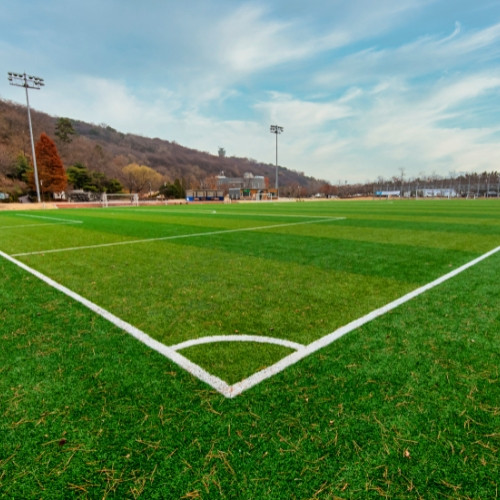
Sports Field Line Marking Best Practices in Australia: The Complete Pre-Season Guide for Turf Managers
Posted by Jason on 28th Jan 2026
Line marking is one of the most visible indicators of professionalism on a sports field. For turf managers, greenkeepers, and grounds staff across Australia, clean and accurate markings aren't just about appearance—they influence player safety, game compliance, and turf longevity.
As school sport, AFL, rugby, cricket, and community competitions ramp up at the start of the season, demand for consistent and compliant markings increases. This guide covers practical, real-world Sports Field Line Marking Best Practices in Australia to help you deliver crisp, durable lines with less rework.
Why This Matters
Clear, accurate line marking supports player safety and visibility, competition compliance, professional presentation, and efficient field use during busy seasons.
When sports seasons kick off and schools return, fields need to be marked on time and right—often with tight turnarounds and heavy usage.
What Governing Bodies Expect
Different sports require different layouts, and many Australian grounds host multiple codes throughout the year. Standards help ensure consistent play areas and reduce confusion for players and officials. For comprehensive field dimension specifications across all codes, see the Department of Local Government, Sport and Cultural Industries Sports Dimensions Guide.
Standard Line Widths by Code
| Sport | Line Width | Notes |
|---|---|---|
| AFL | 50mm | Boundary and centre lines |
| Soccer | 100–120mm | FIFA Law 1 specifies max 120mm |
| Rugby League | 100mm | NRL standard |
| Rugby Union | 100–120mm | World Rugby regulations |
| Cricket | 32mm | Crease markings only |
| Touch Football | 50–100mm | Varies by competition level |
[Download Sports Field Line Marking Cheat Sheet PDF]
Getting line width right matters for equipment setup and paint consumption. A 100mm line uses roughly twice the paint of a 50mm line over the same distance.
For a general overview of professional sports line marking services and how code-specific layouts are typically handled, see: Line Marking Australia – Sports Field Line Marking.
Pre-Mark Field Preparation (The Foundation of Success)
One of the most overlooked elements of Sports Field Line Marking Best Practices in Australia is preparation. Line marking should never compensate for poor surface readiness.
Turf Height & Surface Condition
Mow to an appropriate height for the sport being played—typically 25–35mm for winter codes, 15–25mm for cricket outfields. Avoid marking on long or uneven turf as it causes blotchy, broken edges. Dense, healthy turf improves paint definition and durability.
Turf Type Considerations
Different turf varieties hold paint differently:
Couch (Cynodon dactylon): Fine leaf texture holds paint edges well. Apply slightly lighter coats as paint sits on the surface longer.
Kikuyu (Pennisetum clandestinum): Coarser texture with faster vertical growth. May need more frequent touch-ups as new growth pushes through. Apply at standard rates.
Cool-season blends (Ryegrass/Fescue): Softer leaf absorbs paint faster. Can handle slightly heavier application without stress, but watch for build-up on dormant patches.
Soil Moisture & Weather Timing
Moderate soil moisture (field capacity minus 20–30%) usually improves paint adhesion and clarity. Avoid marking when the surface is saturated—this risks paint bleed and turf disturbance. Avoid marking in extreme heat (above 35°C) or right before heavy rain when possible.
For practical council guidance on timing, products and approach, see: Sutherland Shire Council – Line Marking of Sports Field Guide.
Safety & Approved Practices
Use turf-safe, water-based marking paint. Avoid unapproved chemicals or DIY substitutes that may harm turf or soil. Use appropriate PPE and follow Safety Data Sheet (SDS) instructions.
Sports Field Line Marking Best Practices in Australia
At the core of quality line marking are repeatable systems and disciplined execution.
String Lines: The Non-Negotiable Foundation
Before any paint touches turf, set your string lines. This is the single most important step for achieving straight, accurate marks.
Basic string line method:
- Peg your fixed reference points (goal posts, centre circle markers, or permanent ground markers)
- Run builder's string line taut between pegs at ground level
- Walk the line before marking to check for obstacles, sprinkler heads, or turf damage
- Mark directly along the string—never freehand long runs
For boundary lines exceeding 50 metres, use intermediate pegs every 25–30 metres to prevent string sag.
Use Accurate Measurements (Every Time)
Verify key dimensions before marking—even if the field is "always the same." Turf movement, renovation works, and accumulated error can shift reference points over seasons. Use fixed reference points and measured guides to reduce cumulative error. Document your layout so staff can reproduce it consistently.
Straight Lines, Arcs & Circles
For straight lines, maintain a steady pace and ensure marker alignment is true to the string line. For arcs and circles, use a fixed pivot point (a peg with a measured cord) to maintain consistent radii—never eyeball curves on a competition surface. Where multiple codes apply, plan line order to minimise rework.
Multi-Code Line Sequencing
On shared ovals marked for multiple sports, sequence matters:
- AFL boundary first — This is typically your outermost line and establishes the field perimeter
- Soccer/rugby rectangle second — Position within or aligned to the AFL boundary
- Internal lines last — Centre circles, goal squares, penalty areas
Where codes overlap, mark the dominant competition's lines in white and secondary codes in a contrasting colour (yellow or blue) where regulations permit. Always check with your local association—some competitions require single-code marking for finals.
Consistency Across Multiple Fields
Standardise paint dilution, application speed, and technique across all operators. Use consistent equipment for similar field types. Create a quick "field marking checklist" to reduce missed steps.
[Download Sports Field Line Marking Cheat Sheet PDF]
Choosing the Right Line Marking Equipment
Equipment selection has a major impact on accuracy, efficiency, and operator fatigue—especially when you're managing multiple grounds or tight schedules.
Transfer Wheel vs Spray Systems
Transfer wheel markers remain the preferred method for most Australian sports turf. They deliver cleaner edges with minimal overspray and work particularly well on well-prepared surfaces. The direct contact produces crisp definition that spray systems struggle to match.
Spray systems provide flexibility for irregular surfaces and faster coverage on large areas, but require careful calibration to avoid overspray and paint waste. Best suited for preliminary marking or surfaces where transfer wheels can't maintain consistent contact.
Whichever system you use, consistent pressure/flow and a steady pace matter most.
Professional tip: At higher-level venues, GPS and laser-guided marking systems are increasingly common. These deliver sub-centimetre accuracy and are worth considering for multi-use facilities with complex layouts.
Fernland Line Marking Machines
Bowcom ATOM Line Marking Machine – Precision low-volume marking with adjustable spray options. Ideal for touch-up work and smaller facilities.
Bowcom Trike Motorised Line Marking Machine – Faster coverage and reduced operator fatigue for larger areas. Worth the investment if you're managing multiple ovals.
Selecting the Right Line Marking Paint
Paint choice directly affects visibility, durability, and turf health. High-quality, turf-friendly paints help your lines stay crisp through mowing, training sessions, weather changes, and match traffic.
Paint Coverage & Dilution Guide
| Product Type | Typical Dilution | Coverage (100mm line) | Best For |
|---|---|---|---|
| Ready-to-use (RTU) | None required | 80–120m per litre | Convenience, consistent results |
| Concentrate (8:1) | 8 parts water : 1 part paint | 150–200m per litre (diluted) | Economy on high-volume marking |
| Concentrate (4:1) | 4 parts water : 1 part paint | 100–150m per litre (diluted) | Balance of economy and brightness |
Note: Coverage rates vary with turf type, surface condition, and application method. RTU products eliminate dilution variables and are recommended for less experienced operators or when consistency is critical.
Paint Visibility & Longevity
Choose a paint designed for turf and local UV conditions—Australian sun is harsh on cheaper formulations. Apply evenly; thicker isn't always better and can stress turf. Schedule touch-ups instead of heavy re-coats to prevent build-up.
Fernland Line Marking Paint
Bowcom ATOMIC RTU Line Marking Paint – Ready-to-use, strong brightness, consistent application.
DEFINE (8:1) Line Marking Paint – Durable concentrate designed for high-visibility sports line marking.
Browse Fernland's full range here: Line Marking Equipment & Paint.
Cricket Pitch Marking
Cricket pitch marking presents unique challenges. The rolled, compacted surface behaves differently to the outfield—paint doesn't absorb the same way and wear patterns are intense.
Key considerations:
- Use a high-visibility, durable paint formulated for hard surfaces
- Apply lighter coats more frequently rather than heavy single applications
- Mark creases after rolling, not before—fresh roll provides the best adhesion
- Expect to touch up popping creases after each day of play during matches
- Outfield boundary ropes or markers require their own approach—check competition requirements
Common Line Marking Mistakes to Avoid
- Marking before mowing and surface prep
- Skipping string lines on "familiar" fields
- Using incorrect field dimensions or skipping measurement checks
- Over-applying paint (build-up, turf stress, smudging)
- Ignoring weather changes (rain, heat, wind)
- Inconsistent equipment calibration
- Not accounting for turf type differences
[Download Sports Field Line Marking Cheat Sheet PDF]
Maintaining Lines Throughout the Season
In-season maintenance is about balance. Over-marking can stress turf and create paint build-up, while under-marking reduces visibility and presentation.
Schedule touch-ups every 7–14 days during peak usage. Align marking with mowing cycles for best appearance—ideally mark within 24 hours after mowing. After heavy rain or events, inspect and refresh only where needed rather than re-marking entire lines.
Quick Reference: Field Dimensions
AFL
- Boundary: Oval, typically 135–185m long × 110–155m wide
- Centre circle: 3m radius (inner), 10m radius (outer)
- Goal square: 9m × 6.4m
- 50m arc from goal line
Soccer (FIFA standard)
- Field: 100–110m × 64–75m (international), 90–120m × 45–90m (general)
- Penalty area: 40.3m × 16.5m
- Goal area: 18.3m × 5.5m
- Centre circle: 9.15m radius
- Penalty spot: 11m from goal line
Rugby League (NRL)
- Field: 100m × 68m (in-goal 6–11m)
- 10m lines from halfway
- 20m lines from try lines
- Goal posts: 5.5m apart
Rugby Union
- Field: 100m × 70m max (in-goal 10–22m)
- 22m lines, 10m lines, halfway
- Goal posts: 5.6m apart
Always verify current regulations with the relevant governing body before competition marking.
FAQs
How often should sports fields be re-marked?
It depends on traffic, weather, mowing frequency, and paint quality. Many competitive fields benefit from light re-marking every 7–14 days in peak season. Training-only surfaces can often stretch to 2–3 weeks between applications.
Can one field be marked for multiple sports?
Yes. Multi-use grounds should prioritise clarity and a consistent layout plan. Mark in sequence (boundary lines first, internal lines last) and consider colour differentiation where regulations permit.
What's the best time of day to line mark?
Early morning or late afternoon is often ideal, avoiding extreme heat and fast evaporation. Factor in dew (too wet), irrigation schedules, and upcoming rain. Aim for surface temperatures below 30°C.
Does line marking damage turf?
When you use turf-safe, water-based paint and avoid over-application, line marking has minimal impact on turf health. The bigger risk is paint build-up from repeated heavy coats—schedule light touch-ups rather than infrequent heavy applications.
Are different paints required for cricket pitches?
Cricket pitch surfaces are rolled and compacted, so standard outfield paints may not adhere as well. Many grounds prefer paints formulated for harder surfaces, applied in lighter coats with more frequent touch-ups.
How do I improve straightness on long lines?
String lines are non-negotiable for any run over 10 metres. Peg at both ends, use intermediate pegs on runs over 50 metres, and mark directly along the string. Equipment alignment and consistent pace also help.
What's the difference between RTU and concentrate paints?
Ready-to-use (RTU) paints require no mixing and deliver consistent results. Concentrates offer better economy for high-volume marking but require accurate dilution. RTU is recommended when consistency is critical or for less experienced operators.
Conclusion
Following Sports Field Line Marking Best Practices in Australia helps ensure your grounds are safe, compliant, and visually professional—especially in the pre-season rush as schools and competitions begin.
When surface preparation, string lines, accurate measurement, equipment choice, and turf-safe paint all work together, your lines stay sharper for longer and your workload stays more manageable.
Next step: If you're upgrading gear or reviewing paint options, explore Fernland's full range of line marking equipment and paint here.
Additional Resources
For official field specifications and marking requirements, refer to the relevant governing body documentation:
- AFL Laws of Australian Football 2024 – Official rules including field dimensions and marking requirements
- AFL Preferred Facility Guidelines 2024 – Community facility standards for ovals and line marking
- World Rugby Law 1 – The Ground – Rugby union field dimensions and markings
- IFAB Law 1 – The Field of Play – Official soccer pitch specifications
- NRL Laws of the Game – Rugby league field layout and marking standards