

Procurement language in Australian revegetation is shifting. Council tenders, NRM grant conditions, and corporate ESG-linked planting contracts increasingly require contractors to spec a "plastic-free" or "fully biodegradable" planting kit. For crews who have run the same plastic Corflute and synthetic stake combination for a decade, this raises a practical question: what actually qualifies as plastic-free, and does the alternative kit hold up in the field?
This guide walks through how to spec a compliant plastic-free planting kit for Australian revegetation projects, covering paper tree guards, hardwood stakes, and bamboo stakes. We focus on the spec decisions that matter when you are quoting a job and need to know the kit will survive a Queensland summer, an inland frost, or a paddock full of kangaroos.
Why plastic-free revegetation specifications are now standard in Australia
The policy direction in Queensland and nationally has been clear for several years. The Queensland Government's Plastic Pollution Reduction Plan sets a statewide direction for reducing plastic in the environment, and the single-use plastic items ban has progressively expanded since 2021. Tree guards are not yet on the banned list, but the policy signal is unambiguous and procurement teams are reading it.
At the national level, the Parliament of Australia's national approach to reducing plastic pollution outlines coordinated state and federal action, which flows down into how government-funded revegetation work is now scoped.
The science backs the procurement shift. A peer-reviewed review of microplastics pollution in Australia identifies fragmentation of larger plastic items as a major source of microplastic contamination in sediments, freshwater, and marine environments. Revegetation projects are designed to protect waterways, soil, and biodiversity. A planting kit that breaks down into microplastics on a creek bank works against the goal of the job.
For contractors, three things follow:
- Tenders are starting to specify plastic-free or biodegradable kit by name, not just by performance.
- Sustainability-linked grant conditions are tightening, particularly for Landcare, NRM, and council-funded riparian work.
- End-of-project site audits are checking for plastic kit removal, and contractors who can demonstrate a plastic-free spec from day one avoid the cleanup cost entirely.
What counts as a genuinely plastic-free tree guard
A plastic-free tree guard is one that contains no plastic in its construction, including coatings, films, mesh inserts, or synthetic binders. That sounds obvious until you read the product specs of the "biodegradable" options on the market.
The definition problem: biodegradable, compostable, and plastic-free are not the same
"Biodegradable" is a broad claim and a poorly regulated one. A product can be labelled biodegradable while still containing plastic that fragments rather than breaks down completely.
"Compostable" is tighter. In Australia, the AS 4736 standard certifies that plastic-based materials are suitable for industrial composting under controlled conditions. Products carrying this certification meet a defined breakdown timeframe and leave no toxic residue. This standard is the one to ask about when a supplier claims compostability for a guard that still contains plastic content.
"Plastic-free" is the strictest designation for revegetation purposes. It means the product contains no plastic at any percentage. Many cardboard tree guards on the market use a plastic-based waterproof coating to extend their field life. That coating is small in volume but disqualifies the guard from a strict plastic-free spec. The test is straightforward: if the product is made entirely from paper or natural fibre with no coating, it is plastic-free and no further certification is required to demonstrate that.
Paper tree guards in a plastic-free spec
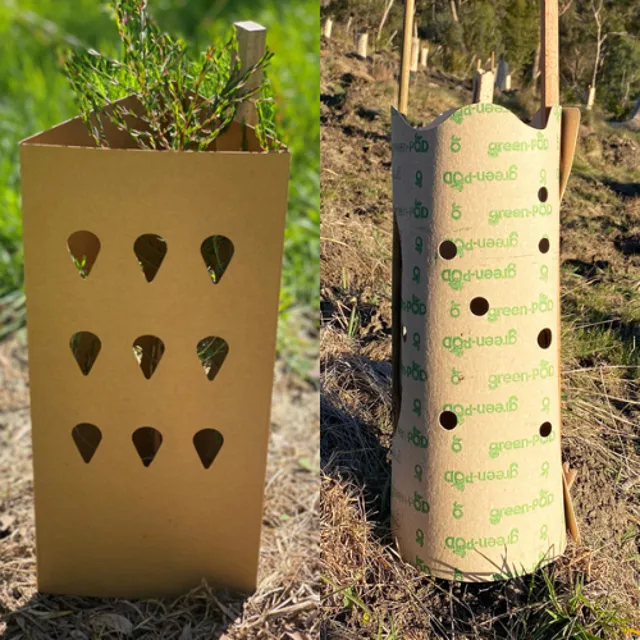
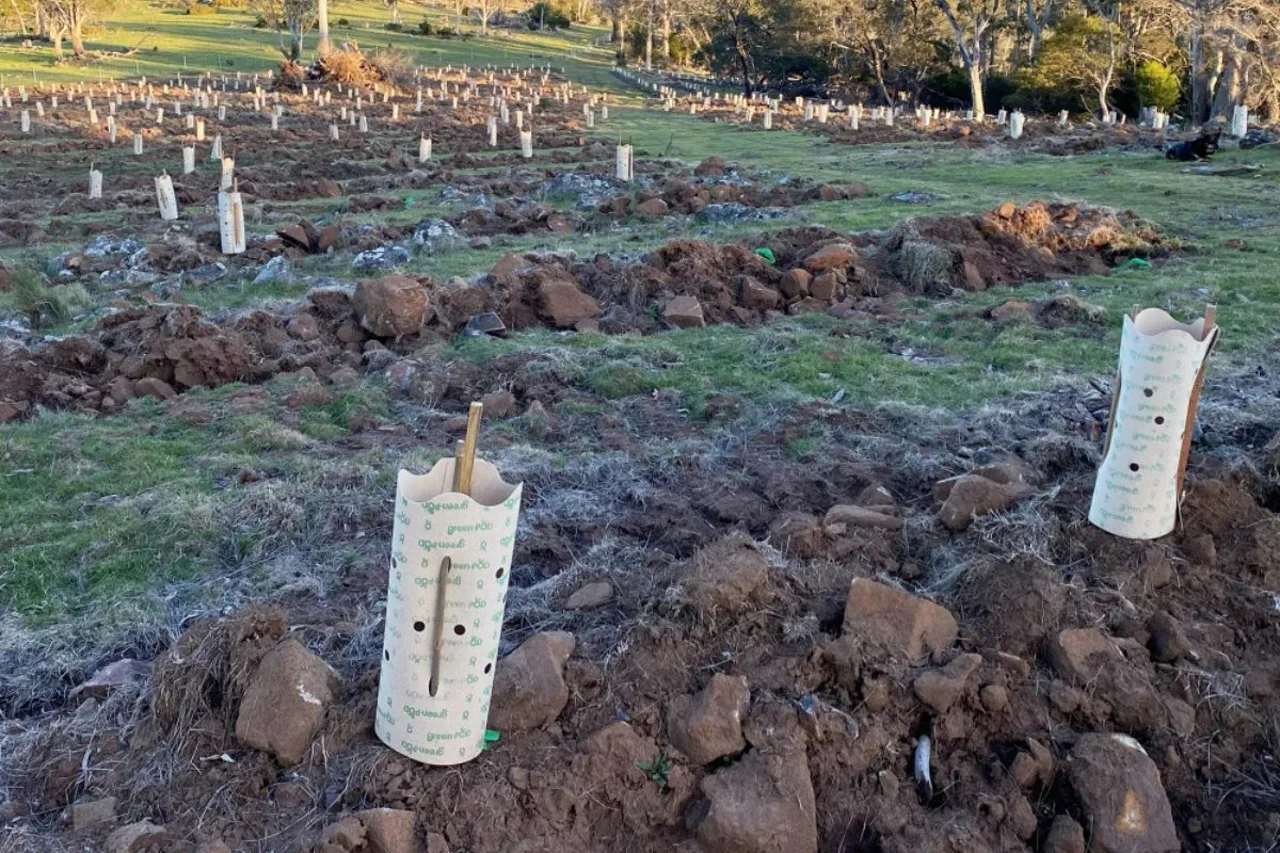
Paper tree guards manufactured from heavy-duty recycled paperboard, without plastic coatings or films, are the standard answer to a strict plastic-free spec. The green-POD Paper Tree Guards we stock are Australian-designed, made from 100% recycled paperboard with no plastic coating, and carry a field life expectancy of approximately 18 months. That covers the critical establishment window for most native tubestock species, and the guards break down naturally on-site, eliminating the labour cost of returning to retrieve plastic guards at the end of a project.
The green-POD is available in two sizes:
- 450mm high x 170mm diameter: suitable for mid-height native tubes or forestry stock, effective shelter in low to moderate browse and wind pressure sites.
- 600mm high x 210mm diameter: designed for taller stock or sites with high wind exposure, animal pressure, or herbicide usage.
Performance considerations for paper guards:
- They breathe, which reduces the "oven effect" inside the guard during Australian summers.
- They require staking. A paper guard without a stake will not survive the first wind event.
- They are not the right choice for projects where guards need to remain functional for three or more years, such as some browse-heavy mine rehabilitation sites where a longer-lived alternative format is more appropriate.
Hardwood stakes for revegetation: spec, sizing, and durability
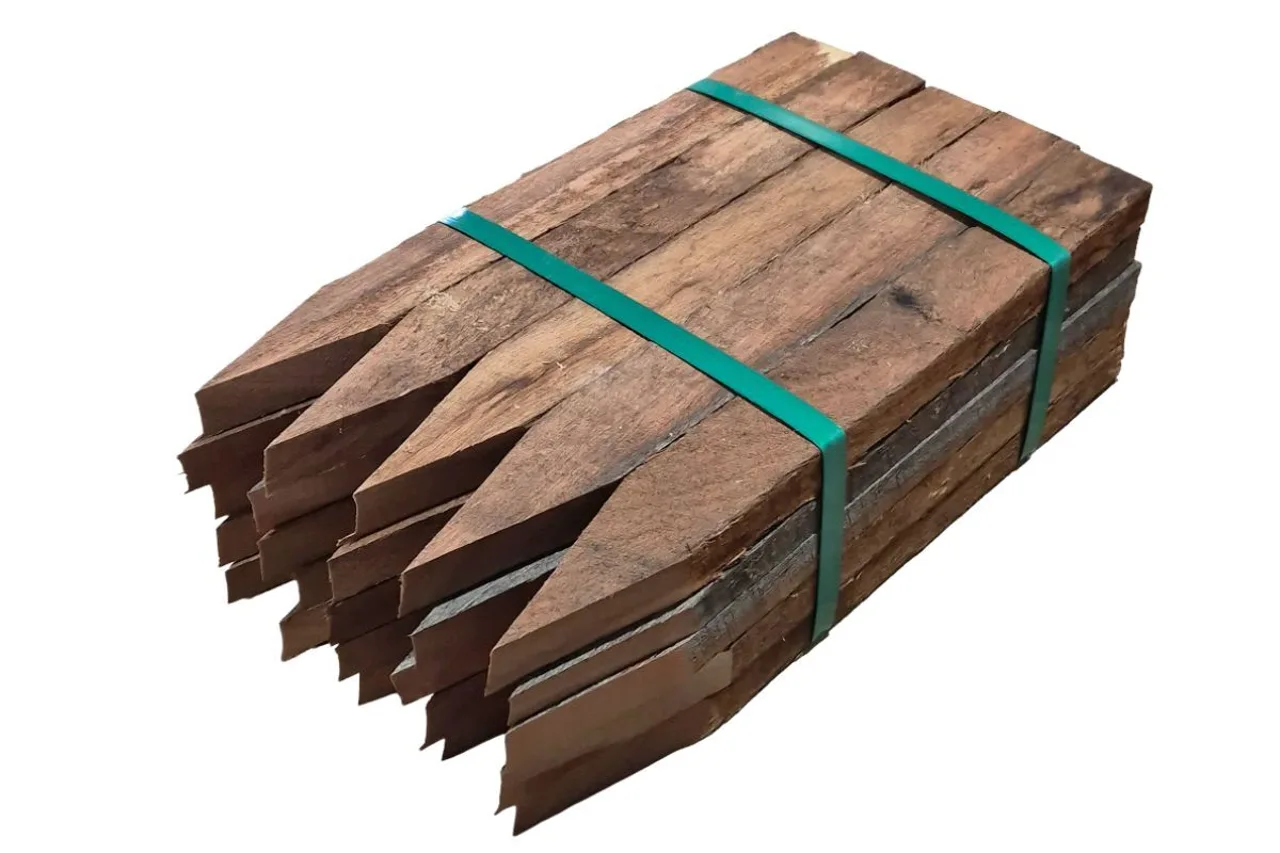
Hardwood stakes are the workhorse of a plastic-free planting kit. Australian hardwood is naturally durable, holds its ground in compacted and rocky soils, and is the trade standard for revegetation staking. The spec decisions come down to profile and length.
Stake profile guide
Profile is the cross-section of the stake, expressed as width by thickness.
- 23 x 11mm hardwood stakes: The lightweight option, suitable for paper tree guards on tubestock plantings with low to moderate wind exposure. This is the profile recommended for the green-POD format.
- 23 x 23mm hardwood stakes: A step up in strength, suitable for taller guards, exposed sites, and longer service expectations.
- 50 x 25mm hardwood stakes: The heavy-duty profile, suitable for cattle and horse paddocks, high wind sites, and any application where the stake needs to hold a larger guard or remain in the ground for multiple seasons.
The full Fernland hardwood stakes range covers each of these profiles in multiple lengths.
Stake length: match to guard height and ground conditions
The stake needs to be driven deep enough to hold the guard firmly through wind events and browse pressure. The softer or looser the soil, the more depth is needed to achieve adequate hold.
- For a 450mm paper guard on firm, well-compacted ground, a 750mm stake is the working minimum.
- For a 600mm guard, loose or sandy soils, or coastal sites where lateral stake resistance is weaker, 900mm or longer is the safer spec.
- For mature tree support beyond establishment, 1500mm and 1800mm hardwood stakes are stocked in heavier profiles.
Service life in Australian conditions
Australian hardwood is naturally durable and will typically outlast the tree guard it supports, which is the right outcome for revegetation. The practical measure of success is that the stake remains sound after the guard has broken down, providing continued wind stability until the plant is self-supporting. For most tubestock revegetation projects this is achieved well within the guard's approximate 18-month field life.
Bamboo stakes: where they fit in a plastic-free kit
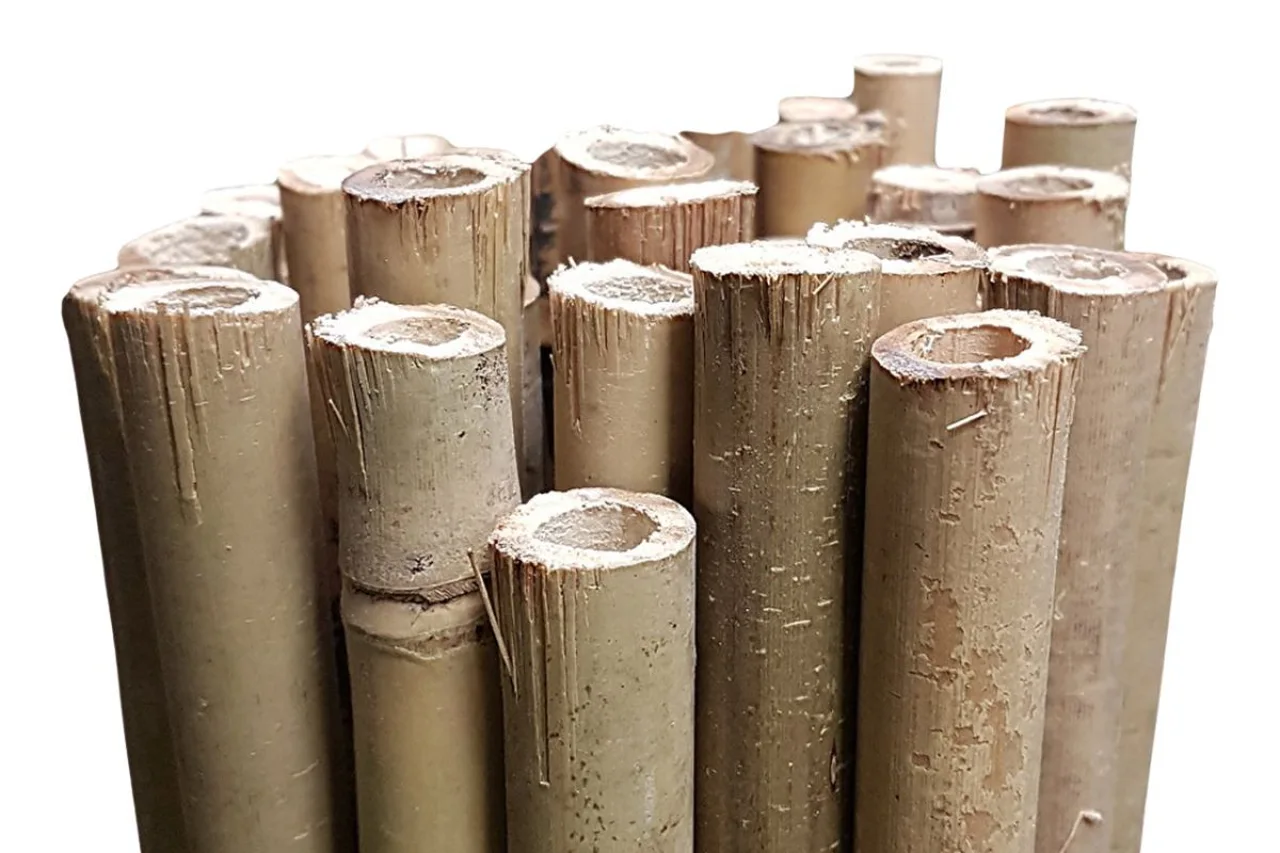
Bamboo is a legitimate plastic-free option, but it has a narrower set of correct applications than hardwood. Used in the right context it is cost-effective and entirely sustainable. Used in the wrong context it fails before the guard does.
Where bamboo works
Bamboo stakes are well suited to:
- Tubestock support during nursery-to-field transition.
- Lighter landscape plantings with low browse pressure.
- Ornamental staking where the stake is replaced or removed within one to two years.
- Temporary support for plants that will outgrow the need for staking quickly.
The Fernland GrowRite bamboo stakes range covers lengths from 45cm through to 300cm, providing enough range to spec most light-duty staking jobs.
Where bamboo is not the right call
Bamboo is the wrong spec for:
- High wind sites or exposed coastal locations where stake flex causes guard failure.
- Cattle, horse, or large macropod paddocks where impact loads snap bamboo.
- Long-term staking applications. Untreated bamboo in ground contact can begin to fail in as little as 12 months in wet subtropical Queensland conditions, and rarely exceeds two years in any in-ground application. If the guard is still doing its job at 18 months and the bamboo has already deteriorated, the plant is at risk.
- Sites with hard or rocky ground where driving bamboo causes splitting and tip failure.
The practical answer when quoting: bamboo for lighter and shorter-duration applications, hardwood for anything exposed, browse-prone, or requiring more than one season of reliable support. Mixing both in a single project based on site conditions is normal and often more cost-effective than over-spec'ing hardwood across the board.
Specifying a plastic-free planting kit: a worked example
Consider a 1,000-tubestock revegetation job along a SEQ creek bank, with moderate kangaroo and rabbit pressure, mixed riparian native species, and a council-funded plastic-free spec.
A compliant plastic-free kit for this job:
- Tree guards: 1,000 x green-POD Paper Tree Guards at 600mm x 210mm diameter, appropriate for the browse pressure and wind exposure of an open creek bank site.
- Stakes: 1,000 to 2,000 x 23 x 23mm hardwood stakes at 900mm length, depending on whether the guard format uses one or two stakes. Two-stake configurations are more robust for exposed creek-bank sites with loose riparian soils.
- Ties: Natural fibre ties such as jute or hessian, avoiding synthetic polypropylene clip systems that would disqualify the kit from a strict plastic-free audit.
- Erosion control where required: For the slope-protection component of the job, see our separate guide on coir vs jute for erosion control in Australia for the material decision.
The full bundle is available through our stakes, tree ties and tree guards range, and our trade team quotes complete revegetation kits regularly for council and contractor work across Queensland and nationally.
Common mistakes when switching to a plastic-free spec
Three failure modes show up consistently when contractors switch to a plastic-free kit for the first time:
- Pairing bamboo stakes with hardwood-grade applications. Untreated bamboo in loose or wet subtropical soils can begin to fail within 12 months. If the guard is still needed at 18 months and the bamboo has deteriorated, the plant is unsupported. Spec hardwood for any site that needs the stake to last as long as or longer than the guard.
- Trusting unverified biodegradable claims. If a guard is made from cardboard with a plastic-based waterproof coating, it is not plastic-free regardless of how it is labelled. Ask suppliers to confirm in writing that the product contains no plastic in any component.
- Under-spec'ing stake depth on loose soils. A stake driven only shallowly into loose sandy riparian soil will not hold a guard through a subtropical storm. The softer the soil, the more depth is needed. Match stake length to site conditions, not just guard height.
For contractors making the switch from plastic to paper, the independent Limestone Coast Landscape Board guide to revegetation maintenance, watering and tree guards is a useful reference on guard inspection and replacement schedules that applies regardless of guard format.
Frequently asked questions
Are paper tree guards as effective as plastic for revegetation?
For the standard establishment window for native tubestock, yes. Paper guards provide wind protection, reduce browse pressure, and create a microclimate around the seedling comparable to plastic. The green-POD Paper Tree Guards have a field life expectancy of approximately 18 months, which covers the critical establishment phase for most species. They are not designed for applications where guards need to remain functional for three or more years.
How long do hardwood stakes last in the ground?
Australian hardwood stakes are naturally durable and will typically outlast the tree guard they support, which is the correct outcome for revegetation. Exact service life varies by species and conditions. For most revegetation projects, the stake remaining sound after the guard has broken down is the practical measure of success.
Can bamboo stakes be used on kangaroo-prone sites?
Generally no. Macropod impact loads can snap bamboo, especially in larger species. For browse-prone sites, spec a 23 x 23mm or 50 x 25mm hardwood stake instead, and consider a taller guard.
What does "plastic-free" actually mean in a council revegetation spec?
It means the planting kit contains no plastic in any component, including guard coatings, stake materials, and tie systems. Paper guards made from 100% recycled paperboard with no plastic coating are genuinely plastic-free. For any guard making a biodegradable claim while still containing plastic content, ask the supplier to confirm in writing that the product contains no plastic.
Is Queensland banning plastic tree guards?
Plastic tree guards are not currently on the Queensland single-use plastic items ban list. The state's Plastic Pollution Reduction Plan signals direction of travel, and procurement teams in council and grant-funded work are increasingly writing plastic-free requirements into tenders even without a legislative ban.
Quoting a plastic-free revegetation project
The shift to plastic-free revegetation specs is a procurement reality, not a future trend. Contractors who can confidently spec a compliant kit win the tenders. Contractors who hedge on whether their kit is genuinely plastic-free lose them.
For project quotes covering paper tree guards, hardwood and bamboo stakes, and the broader plastic-free planting kit, contact the Fernland trade team. We stock the full range, quote regularly for council and contractor revegetation work across Queensland and nationally, and can confirm in writing what is and is not plastic in any product we supply.