
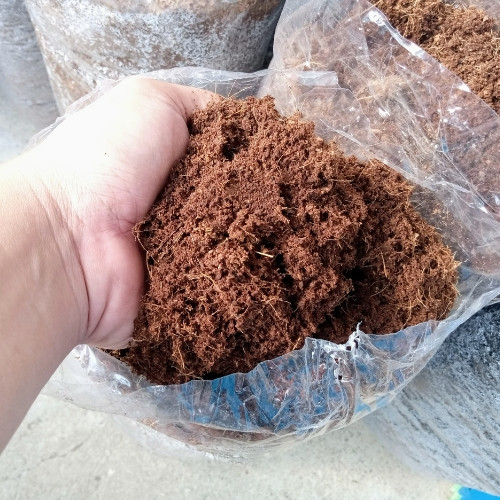
How to Get the Most Out of Coir-Based Growing Media in Your Nursery
Posted by Jason on 16th Mar 2026
Coir-based growing media has become standard practice in Australian production nurseries. It holds up to eight times its weight in water, rewets easily after drying, maintains its structure longer than bark or peat, and is produced from a renewable coconut industry byproduct. But many growers who switch to coir find that plants yellow unexpectedly, root development stalls, or their existing fertiliser program stops delivering results.
The problem is rarely the coir itself. It is how the system around the coir is managed. Unlike bark or peat, coir is a biologically inert substrate. It arrives with no native microbial population, limited inherent nutrition, and different water-release characteristics to the organic media most growers are trained on. Treating it the same way leads to poor outcomes.
This guide covers the three pillars of a high-performing coir system for Australian nurseries: choosing the right substrate format, building soil biology from scratch, and running a feeding program designed for soilless media.
Why Coir Behaves Differently to Bark and Peat
Understanding why coir requires a different management approach starts with its physical and chemical properties. Coir pith has a total porosity of 92–94%, compared to 75–80% for composted bark and 89–94% for peat. That high porosity means exceptional water retention, but it also means coir holds less air-filled porosity (9–12%) than bark (19–24%) when fully saturated. In practical terms, coir stays wetter for longer. Watering schedules built around bark-based mixes will overwater coir, leading to root diseases like Pythium and Phytophthora.
Coir also has a near-neutral pH of 5.5–6.5, so the lime additions common in peat-based mixes are unnecessary and can push pH too high if carried over from old recipes. And because coir is not decomposed organic matter, it does not host the microbial populations that bark and peat naturally carry. Those microbes are responsible for nutrient cycling, pathogen suppression, and root-zone health. Without them, coir is a clean but empty growing environment.
Choosing the Right Coir Format for Your Operation
Coir is available in several formats, and choosing the wrong one for your crop type is one of the most common mistakes growers make when transitioning from bark-based systems.
Coir Pith Blocks and Bales for Propagation and Small Pots
Fine coir pith — sometimes called cocopeat — is the best format for seed raising, cutting propagation, and small container production. Its fine, consistent particle size holds moisture evenly around developing roots and provides excellent seed-to-media contact for germination. GrowRite Cocopeat Coir Pith Blocks each yield approximately 60 litres of ready-to-use media from a 5 kg compressed block. For larger nursery operations, GrowRite Cocopeat Bales are available in 80-litre and 200-litre sizes, reducing handling time and storage space.
Key advantage: GrowRite cocopeat arrives pre-washed with a low electrical conductivity (EC) under 1 mS/cm and a near-neutral pH around 6. This means no soaking, no rinsing, and no buffering before use — break up the block or bale, hydrate, and go.
Coir Grow Bags for Protected Cropping
Nurseries and growers operating in greenhouse or polytunnel environments producing vegetables, berries, cut flowers, or medicinal crops should consider pre-filled GrowRite Cocopeat Maxi Grow Bags. Available in 6-litre and 8-litre sizes, these bags contain a blended 60/40 or 70/30 ratio of coir pith and coir chips. The chips increase air-filled porosity and drainage, while the pith retains moisture — giving you the best balance for long-cycle crops grown in controlled environments.
The UV-rated bags come with pre-cut drainage, dripper, and plant holes, so they are ready to plug into existing fertigation systems without modification.
Blending Coir into Existing Mixes
Not every nursery needs to go 100% coir. Many production nurseries improve water retention in bark-dominant mixes by adding 20–30% coir pith by volume. This is particularly useful in subtropical and tropical regions of Australia where summer heat and wind accelerate moisture loss from containers. Even a partial coir blend can significantly reduce watering frequency and improve rewetting behaviour in mixes that tend to become hydrophobic when they dry out.
Building Biology in an Inert Substrate
This is where most coir transitions fail. Bark-based growing media naturally contains microbial communities that break down organic matter, cycle nutrients, and suppress root pathogens. Coir has none of this. It is a clean, sterile slate — which is actually an advantage if you introduce the right biology deliberately, because you control what goes in rather than inheriting whatever came with the bark.
Why Biology Matters in Coir
Beneficial soil microbes perform several critical functions in the nursery root zone. They mineralise phosphorus, potassium, and trace elements into plant-available forms. They produce natural growth hormones that stimulate root branching and fine root hair development. They generate carbon dioxide, which improves aeration and water movement through the media. And they competitively exclude pathogenic organisms by occupying the same ecological niches.
In a coir system, none of this happens unless you introduce it.
Using Biostimulants to Inoculate Coir
FloraTech Stimulate is a microbial soil activator containing 12 million colony-forming units per millilitre. Applied through fertigation at planting or transplanting, it rapidly establishes a beneficial microbial population in the root zone. This is not a fertiliser — it is the biological workforce that makes your fertiliser work harder. Stimulate accelerates the digestion of any organic amendments in the mix, enhances nutrient mineralisation, and generates CO₂ to improve media aeration.
For root establishment and transplant recovery, FloraTech Rejuvenate combines seaweed extract, humate, and an organic nutrient complex to stimulate root growth during critical early development stages. The humate component is especially important in coir systems — it improves the media's ability to hold and exchange cations (positively charged nutrient ions), addressing one of coir's few limitations as a standalone substrate. Rejuvenate integrates directly into existing fertigation lines and is compatible with most fertilisers and pesticides.
A practical approach: apply FloraTech Stimulate as a drench at potting-up or transplanting to establish biology, then follow up with FloraTech Rejuvenate during the first four to six weeks to drive root development. This two-product program gives coir-grown plants the biological foundation they would naturally inherit in a bark-based system.
Feeding Programs for Soilless Coir Media
Coir holds nutrients effectively through its cation exchange capacity, but it contributes almost no nutrition of its own. This means your feeding program is not supplementary — it is the entire nutrient supply. Getting it wrong shows up fast in coir, because there is no organic matter buffer to mask errors the way bark or peat can.
Principles of Feeding in Coir
There are four principles that guide an effective coir feeding program:
Feed little and often. Coir-grown plants respond best to consistent, low-concentration feeds delivered through fertigation at every second or third watering, rather than heavy periodic applications. This maintains steady nutrient levels in the root zone without salt buildup.
Use chelated trace elements. Fresh coir can temporarily bind calcium and magnesium through its cation exchange sites. Chelated micronutrients remain plant-available even in a high-CEC substrate, preventing the yellowing and interveinal chlorosis that growers commonly see — and wrongly blame on the coir itself.
Skip the lime. Coir sits at pH 5.5–6.5 naturally. Adding lime (a habit carried over from peat-based systems) pushes pH above the optimal range for most nursery crops, locking out iron, manganese, and zinc.
Monitor EC and runoff. Because coir holds moisture longer than bark, salts can accumulate if the grower does not periodically flush or monitor EC. Aim for a runoff EC no more than 1.5 times the input solution.
Recommended Liquid Fertiliser Program
For general nursery production in coir-based media, FloraFert Plant Pro 10-1-5 +TE provides a balanced blend of nitrogen, phosphorus, potassium, plus chelated magnesium, manganese, and a full suite of trace elements. Its low-salt formulation is specifically suited to young plants and coir systems where salt sensitivity is a concern. The 100% chelated micronutrients ensure rapid uptake, even in a high-CEC medium like coir.
For maintenance feeding across established stock, FloraFert WSF All Rounder 20-2-16 delivers a higher nitrogen ratio for sustained vegetative growth, plus 7.7% sulphur and trace elements. It dissolves cleanly and is ideal for year-round fertigation programs through drip, spray, or boom systems.
Both products integrate with FloraTech Rejuvenate and Stimulate in the same fertigation line, so you can deliver nutrition and biology in one pass.
Putting It All Together: A Coir System Checklist
Transitioning to coir or optimising an existing coir-based system does not require overhauling your nursery. It requires adjusting three things: your substrate choice, your biology, and your feeding. Here is a practical checklist:
Substrate: Select the GrowRite cocopeat format that matches your production — pith blocks or bales for propagation and containers, grow bags for protected cropping, or loose pith blended at 20–30% into bark mixes for improved water retention.
Biology: Inoculate at potting-up with FloraTech Stimulate to establish root-zone microbiology. Follow with FloraTech Rejuvenate for the first 4–6 weeks to accelerate root development and improve nutrient exchange in the media.
Feeding: Move to a liquid fertigation program using FloraFert Plant Pro (young stock and transplants) or FloraFert WSF All Rounder (established stock). Feed at every second or third watering at low concentration. Monitor runoff EC. Do not add lime.
Watering: Reduce watering frequency compared to bark-based mixes. Coir rewets easily and holds moisture longer. Overwatering is the most common error when transitioning to coir.
Frequently Asked Questions
Why do plants yellow in coir-based growing media?
Yellowing in coir is usually nutrient lockout, not deficiency. Fresh coir can temporarily bind calcium and magnesium at its cation exchange sites, making them unavailable to roots. Using pre-washed, low-EC coir like GrowRite Cocopeat eliminates most of this issue. Adding a biostimulant containing humate — such as FloraTech Rejuvenate — further improves nutrient availability. A liquid fertiliser with chelated trace elements completes the solution.
Can I use coir as a direct replacement for peat moss?
Not as a one-for-one swap. Coir holds more water, has a higher pH than peat, and is biologically inert. You will need to drop the lime from your recipe, reduce watering frequency, introduce microbial inoculants, and shift to a liquid feeding program. The physical properties are similar enough that coir works in the same applications, but the management around it changes.
What is the best coir format for nursery propagation?
Fine coir pith (cocopeat) in compressed blocks or bales is ideal for seed raising, cuttings, and small pots. Its consistent particle size provides even moisture distribution and good seed-to-media contact. For larger containers or long-cycle crops, blending coir pith with coir chips improves drainage and airflow.
How often should I fertilise plants in coir?
Coir contains almost no inherent nutrition, so consistent feeding is critical. Most nursery operations fertigate at every second or third watering using a dilute liquid fertiliser. A balanced formula with chelated trace elements — such as FloraFert Plant Pro 10-1-5 +TE — ensures steady nutrient availability without the salt buildup that can occur in coir if heavy applications are used infrequently.
Need Help Dialling In Your Coir Program?
Every nursery operation is different. Crop type, climate zone, irrigation setup, and production scale all influence the ideal substrate, biology, and feeding combination. The Fernland team can help you select the right GrowRite growing media format, build a FloraTech biostimulant program, and structure a FloraFert feeding schedule tailored to your operation.
Call us on 1800 672 794 or contact us online to talk through your growing media requirements with our horticultural team.
Or browse the full Growing Media, Components & Conditioners range to see what is available for your nursery.