

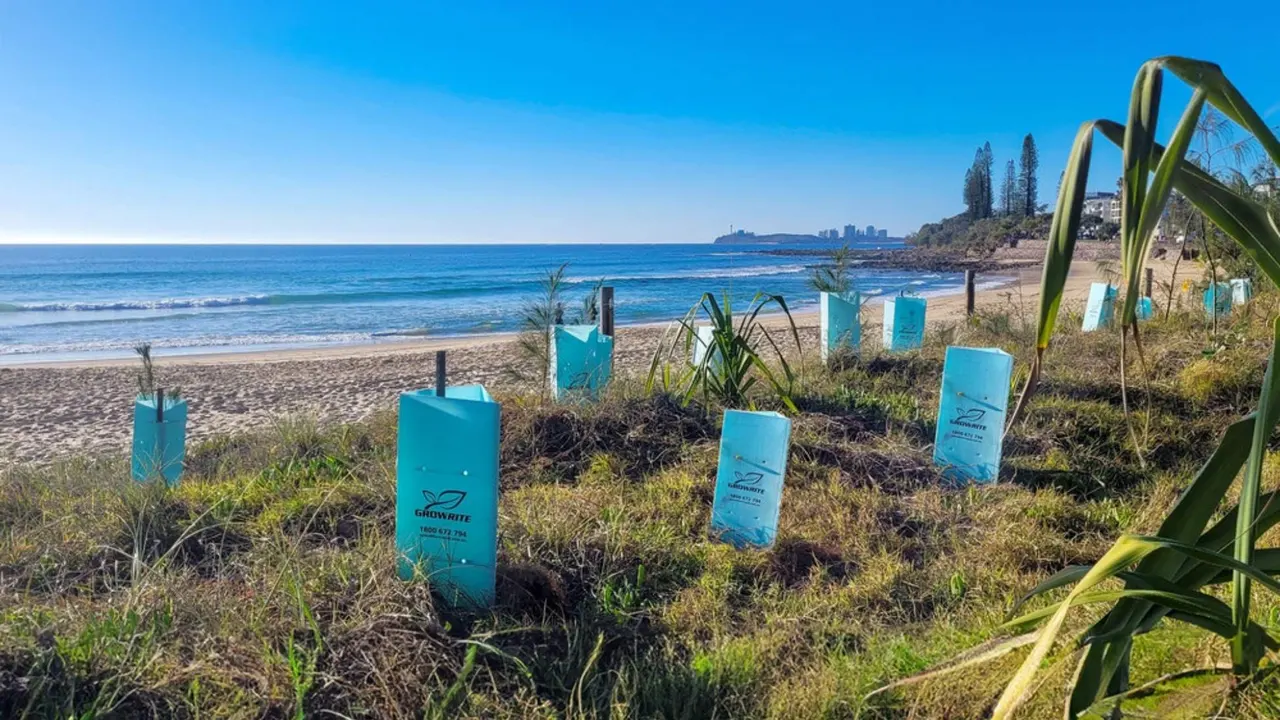
The right tree guard depends on three things: what's browsing the site, how exposed the site is, and whether anyone will come back to remove the guard. CorFlute guards suit most tubestock plantings with rabbit and small-animal pressure, wind exposure or a follow-up spray program. Heavy-duty mesh guards are for kangaroo and wallaby country. Biodegradable cardboard and paper guards are the pick where guards won't be retrieved or the planting sits next to a waterway. This guide compares each type of tree guard, covers sizing, staking and removal, and finishes with a worked Queensland example.
Key Takeaways
Match the guard to the browse pressure first. Solid guards are aimed at rabbits and small vermin. Kangaroo and wallaby sites need a heavy-duty mesh guard.
Spray programs suit solid guards. CorFlute guards are designed to protect young plants from spray drift during follow-up weed control.
Near waterways, go biodegradable. NSW Government guidance does not recommend plastic guards for creeklines or waterways.
Airflow matters in Queensland. On hot sites, guards can create a humid micro-climate that raises the risk of fungal disease, so choose vented or open designs.
Budget for stakes and removal. Stakes, installation labour and guard retrieval add significantly to the cost of every guard.
What Are the Main Types of Tree Guards?
Most Australian revegetation and landscape jobs use CorFlute, mesh or biodegradable guards for tubestock, with milk carton guards as a budget option and trunk protectors for advanced trees.
CorFlute Tree Guards
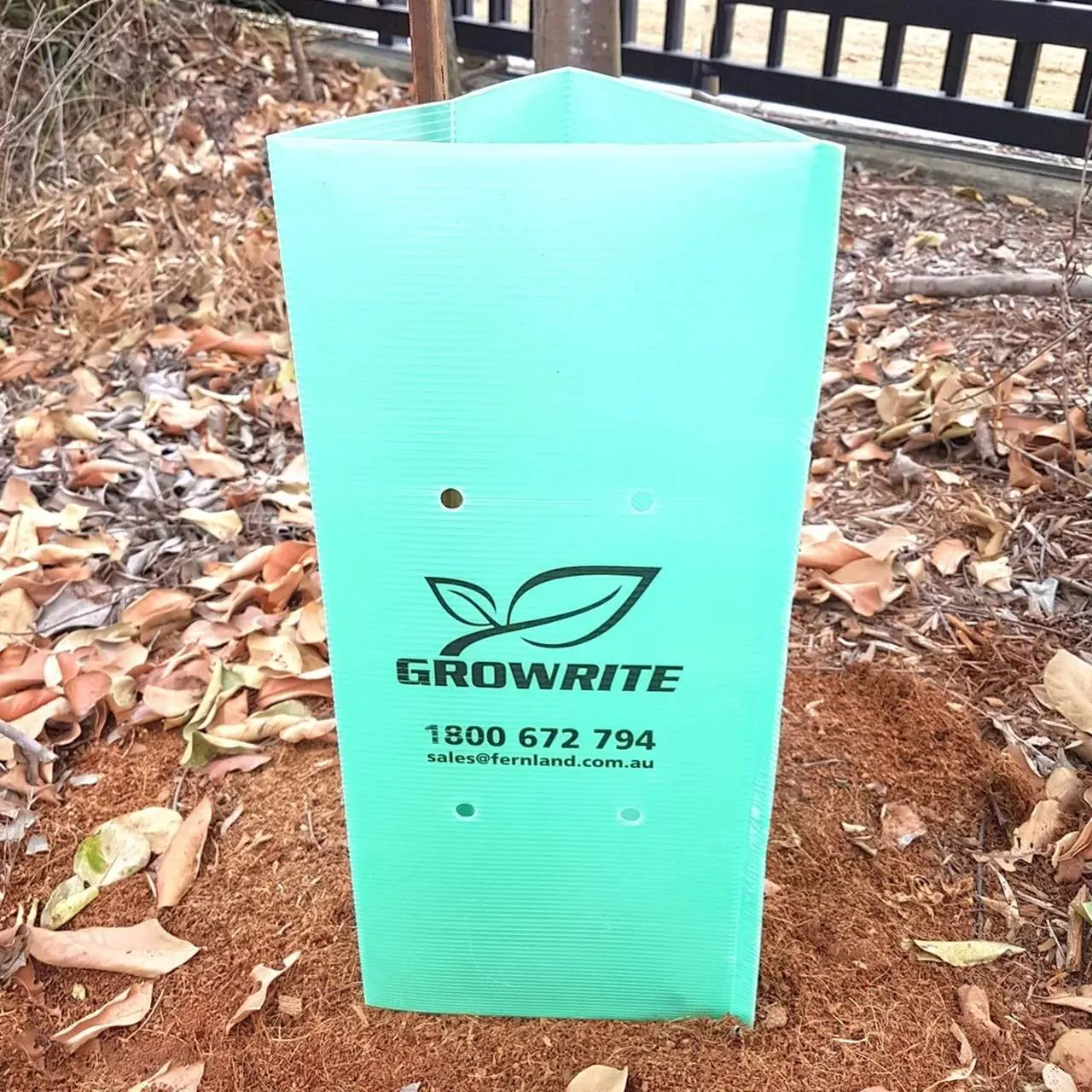
CorFlute (corrugated plastic) guards are rigid and quick to install, and they're widely used for tubestock on revegetation, council and roadside jobs. GrowRite CorFlute Tree Guards protect young plants from vermin, spray drift and wind. They're UV stabilised, have side holes for air circulation, are 100% recyclable (made from PP5 plastic), and need only one hardwood stake per guard. Their triangular shape is a strength advantage too: Landcare NSW notes that triangular guards are typically a stronger design.
Mesh Tree Guards
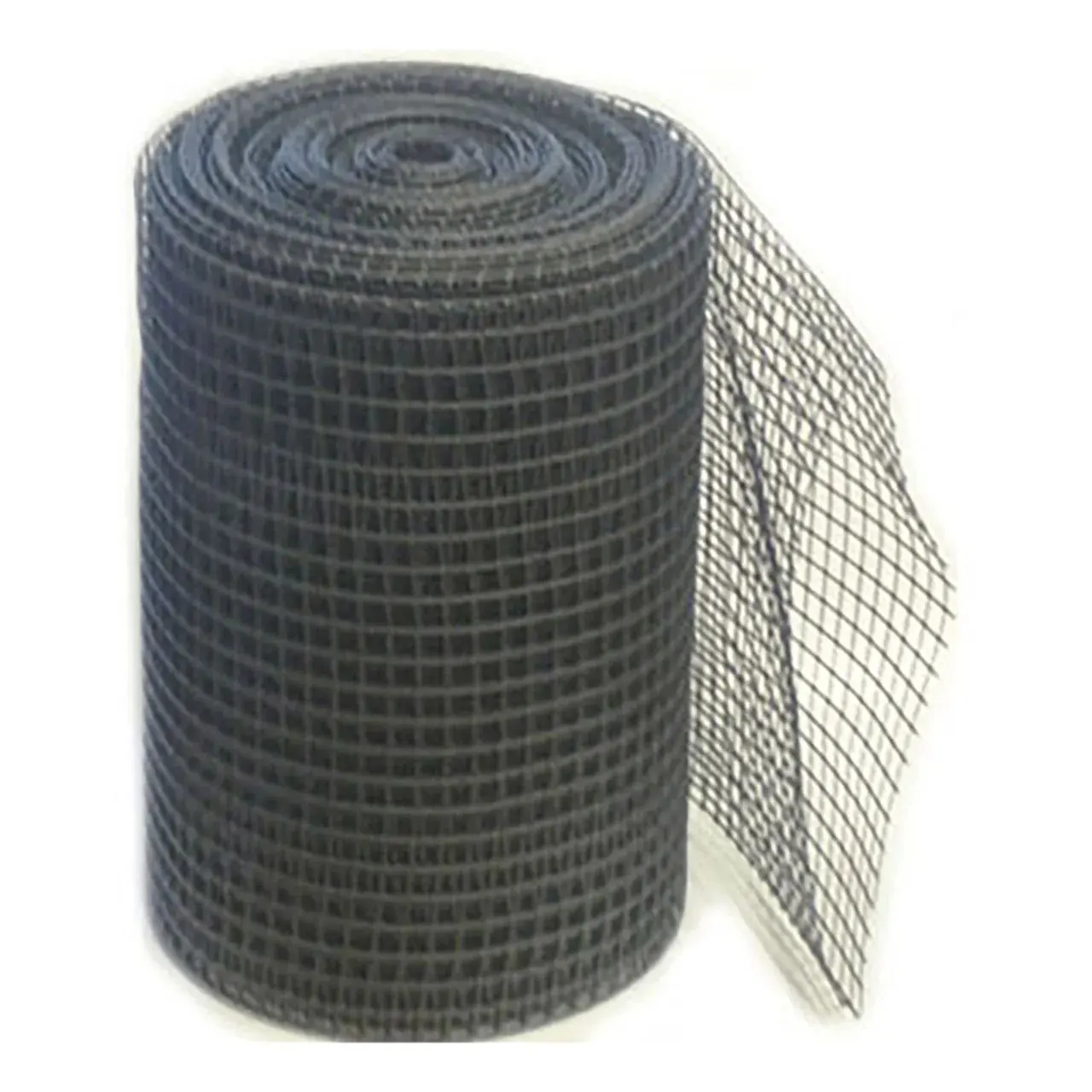
Mesh guards are cut from a roll to the height each plant needs. They let air and light through while keeping larger browsing animals out. The GrowRite HD Mesh Tree Guard is a black heavy-duty mesh with 20mm square holes, supplied in 500mm x 30m rolls (320mm diameter in use). It's designed for sites frequented by kangaroos, wallabies and other larger animals.
Biodegradable Cardboard and Paper Tree Guards
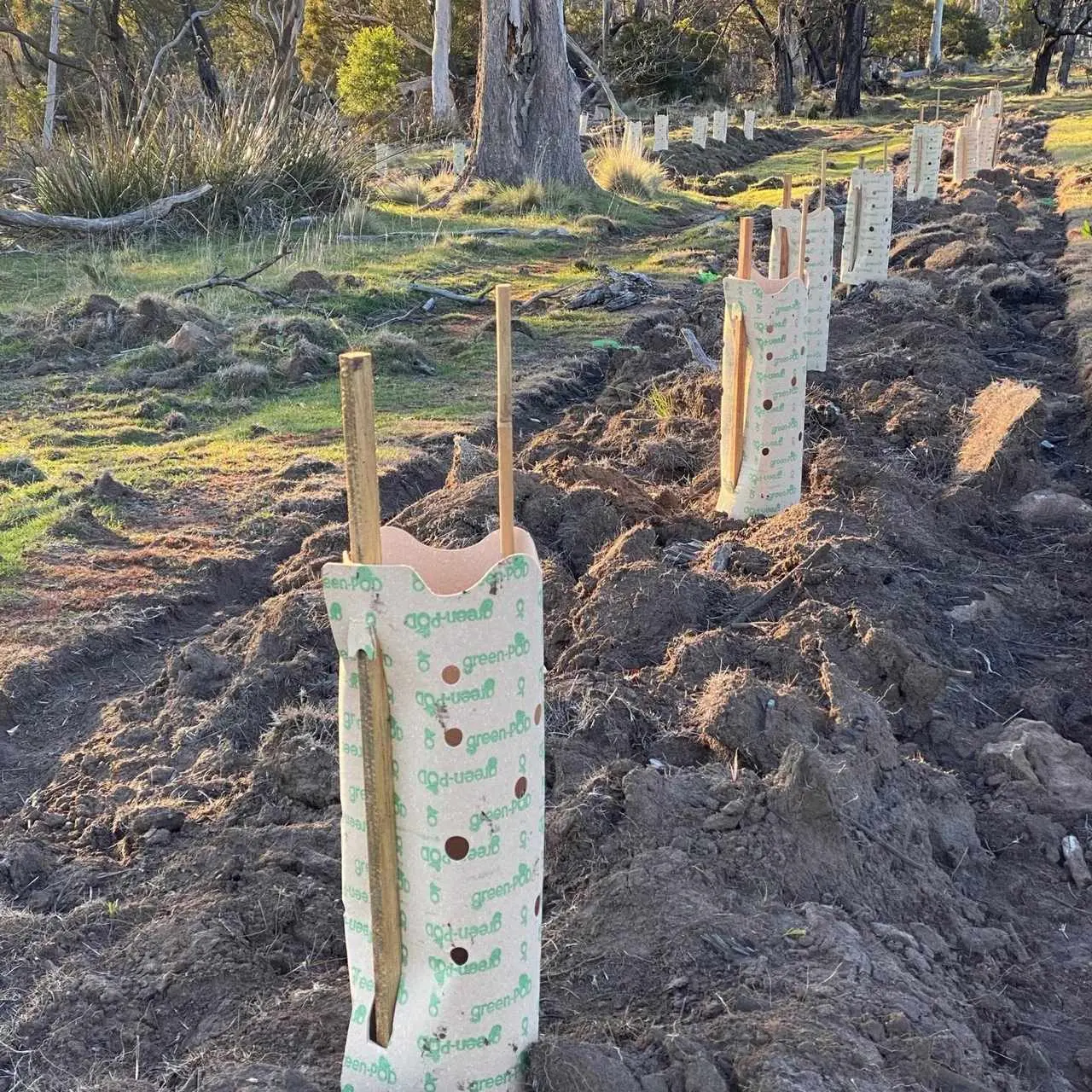
Biodegradable guards break down on site, so there's nothing to retrieve at the end of the job. GreenGuard Enviro tree guards are made in Australia from plantation pulp with no plastic coating. They're field-proven for around 12 months or more and give moderate browsing protection. The POP format is triangular, 450mm high with 200mm panels, and anchors with one wooden stake or two bamboo canes. It's supplied in bundles of 10, packs of 50 or pallets of 5,000. The GreenGuard range runs from 320mm to 600mm high across four formats, and Fernland also stocks green-POD Paper Tree Guards. Designed in Australia from heavy-duty, 100% recycled paperboard with no plastic coating, green-POD guards are fully compostable with a field life of 18 months or more. They withstand wind, sun and chemical spray drift and protect against herbicides and browsing animals. The 450mm high x 170mm diameter size suits mid-height native tubes in low to moderate pressure sites, and the 600mm high x 210mm diameter size is for taller stock or sites with high wind, animal pressure or herbicide use. Each takes one or two hardwood stakes.
If your job specifies plastic-free materials, our plastic-free revegetation guide covers what qualifies and how to spec a compliant kit.
Milk Carton Tree Guards

Milk carton guards are a compact, low-cost option for small tubestock on large plantings. The Australian-made 2 Litre Milk Carton Tree Guard is 300mm high and 95 x 95mm square, and protects young plants from vermin, spray drift and wind. It's held with bamboo stakes, and Fernland recommends 60cm, 8 to 10mm bamboo.
Trunk Protectors for Advanced Trees
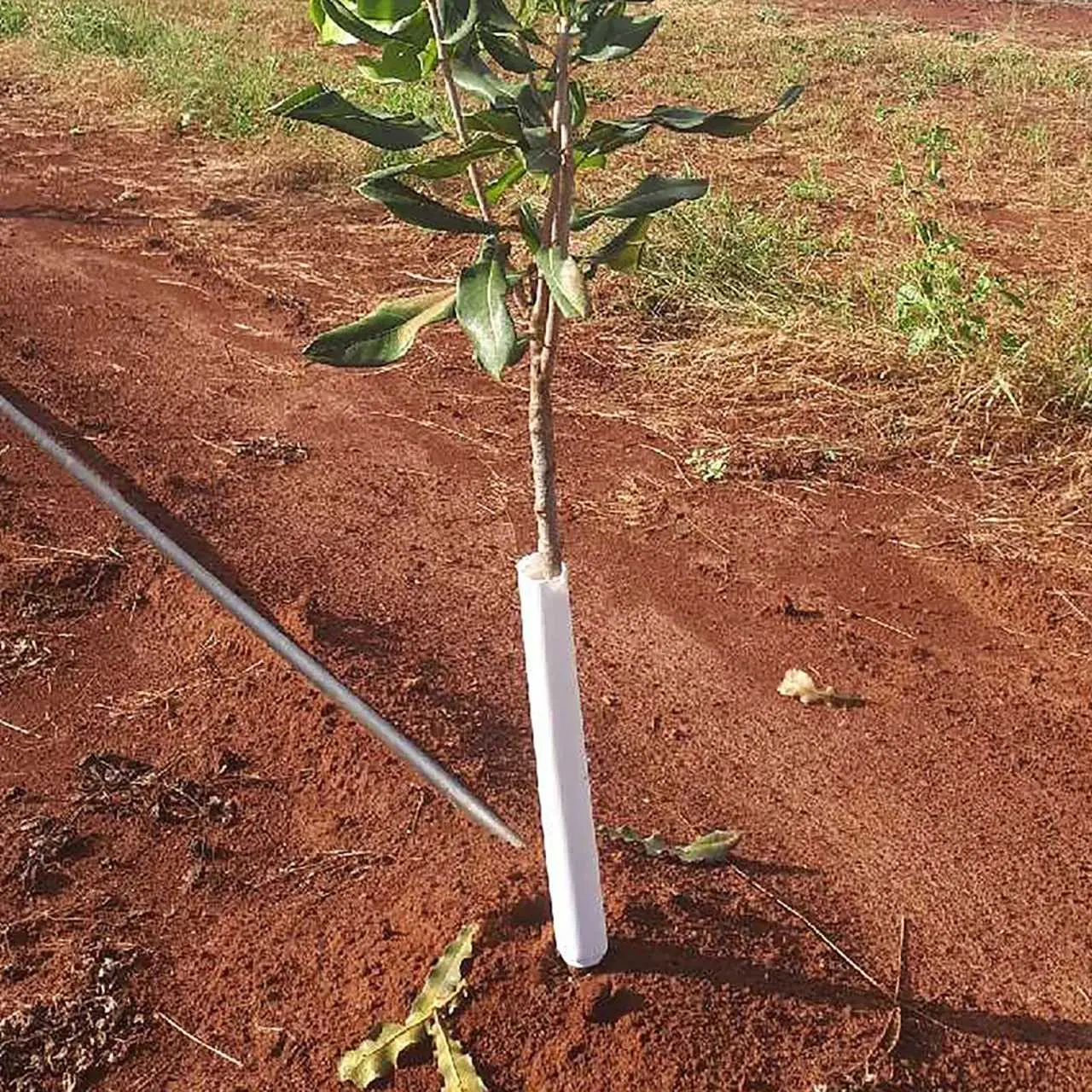
Once a tree is past the tubestock stage, the risk shifts to the trunk: vermin, herbicide during weed control, and damage from maintenance equipment. The SpringWrap Tree Trunk Protector is a coiled sleeve that pulls open, wraps around the trunk and re-coils for a snug fit. It shields young trunks from vermin and herbicides, expands as the trunk grows, and encourages straight trunk growth by suppressing lateral shoots. It's made from UV-stabilised high-density polyethylene, is 300mm high for 30 to 40mm trunks, lasts three years or more, and can be removed and reused.
Tree Guard Comparison
Guard type | Designed for | Airflow | Staking | Retrieval | Best for |
|---|---|---|---|---|---|
CorFlute | Vermin, spray drift and wind | Side vent holes | 1 hardwood stake | Required (recyclable) | General tubestock planting, wind-exposed sites, sites with follow-up spraying |
HD Mesh | Kangaroos, wallabies and larger animals | Open mesh | Hardwood stakes | Required | Sites with macropod pressure, taller plantings |
Milk carton (2L) | Vermin, spray drift and wind | Solid walls | Bamboo stakes (60cm, 8 to 10mm) | Remove when plants outgrow it | Small tubestock on large, budget-driven plantings |
SpringWrap trunk protector | Vermin and herbicide on young trunks | Open coil | None (wraps the trunk) | Remove and reuse | Advanced stock, streetscapes and orchard trees |
Biodegradable (GreenGuard, green-POD) | Moderate browsing protection | Solid walls | GreenGuard POP: 1 wooden stake or 2 bamboo canes. green-POD: 1 or 2 hardwood stakes | Not required | Waterways, plastic-free specs, sites that won't be revisited |
Which Tree Guard Is Best for Kangaroos and Wallabies?
A heavy-duty mesh guard. Shorter solid guards are aimed at rabbits and small vermin, while the HD Mesh is built for sites frequented by kangaroos and wallabies. Cut it tall enough to keep new growth out of reach and stake it firmly. On sites with cattle or heavy macropod pressure, stronger stock guards may need to stay on for much longer: South Australian landscape guidance notes that heavy stock guards may need to stay in place for up to 10 years.
Which Tree Guard Is Best Near Waterways?
A biodegradable guard. The NSW Government's revegetation guidance states plastic guards are not recommended for creeklines or waterways, because a dislodged guard ends up in the water. For creek bank and riparian jobs, GreenGuard or green-POD guards remove that risk. Pair them with coir for bank stabilisation; our coir vs jute guide covers which matting suits wet sites.
Do Tree Guards Cause Problems in Hot Queensland Conditions?
They can if airflow is poor. Land for Wildlife South East Queensland notes that guards protect plants from animals, wind and mild frosts, but warns that on sites prone to higher temperatures, tree guards can create a hot and humid micro-climate that increases the possibility of fungal disease. On hot, humid SEQ sites, CorFlute guards with side vent holes or open mesh guards keep air moving around the plant. The same note recommends a weed-free area at least 1m wide around each plant at planting, increasing to 2 to 3m as the plant grows.
What Height Tree Guard Do I Need?
Landcare NSW recommends 450mm or 600mm guards for midstorey and canopy species, and notes that guards which let more light reach the plant can help growth. Go taller for taller stock and for exposed or browse-heavy sites.
CorFlute: 450mm high with 200mm sides, or 590mm high with 255mm sides for taller stock and exposed sites.
HD Mesh: cut from the roll to the height you need.
GreenGuard: four formats from 320mm to 600mm high.
How Many Stakes Does a Tree Guard Need?
CorFlute: one hardwood stake. Fernland recommends a 75cm, 25 x 11mm hardwood stake.
GreenGuard POP: one wooden stake or two bamboo canes. GreenGuard recommends a 75cm hardwood stake for the POP and a 90cm stake for the taller MAXI.
green-POD: one or two 25 x 11mm hardwood stakes.
HD Mesh: secure with hardwood stakes, driven firmly enough that animals can't push the guard over.
GrowRite Pointed Hardwood Stakes in the 25 x 11mm profile come in 75cm and 90cm lengths for tree guard staking. Stake count adds up fast on large jobs. The Revegetation Guide points out that guard costs climb once you include two to three stakes per guard plus installation labour, which is why one-stake guards such as CorFlute save real money at project scale. For stake profiles and lengths by soil type, see the staking section of our plastic-free revegetation guide.
When Should Tree Guards Be Removed?
Once the plant has outgrown the guard. The Limestone Coast Landscape Board recommends removing guards when plants are 10 to 15cm above the guard, or when growth is clearly being restricted. Leave them on too long and tall plants can't support themselves once the guard comes off.
Timing varies with the guard type. South Australian guidance suggests removing cardboard and corflute guards after about 12 months to prevent stunted growth, while heavy stock guards can stay much longer. For non-biodegradable guards, build a return visit into the quote. Biodegradable guards break down on site and don't need one.
Worked Example: 1,000 Tubestock on a SEQ Council Parkland Job
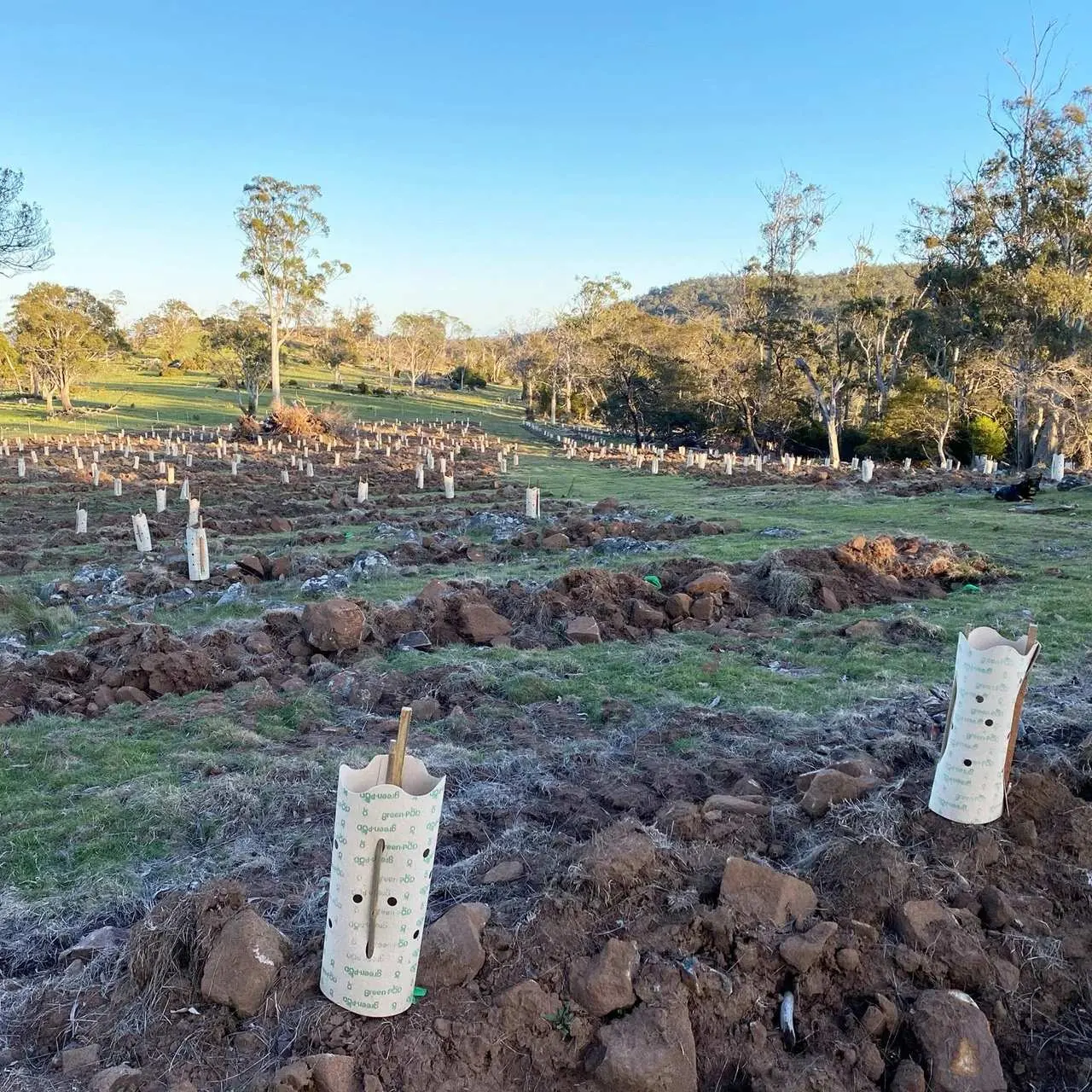
Consider a council parkland revegetation job in South East Queensland: 1,000 native tubestock across one site with three different conditions. One guard won't suit all of it, so the spec changes by zone.
Zone | Conditions | Plants | Guard | Stakes | Order | Removal plan |
|---|---|---|---|---|---|---|
A: Open grassland | Wallaby pressure, open to wind | 300 | HD Mesh, cut to 600mm high | Hardwood stakes | 6 x 30m rolls (50 guards per roll) | Remove once plants are above browse height |
B: Path and road edge | Rabbits, scheduled spot spraying | 500 | CorFlute 450mm | 500 x 75cm, 25 x 11mm hardwood | 500 guards, 500 stakes | Collect when plants are 10 to 15cm above the guard and send for recycling |
C: Creek line | Riparian, flood-prone | 200 | GreenGuard POP 450mm | 200 x 75cm hardwood | 4 packs of 50, 200 stakes | Left to break down on site |
The result: no plastic near the water, solid guards where spraying happens, mesh where wallabies feed, and a return visit only for zones A and B. Across the site, clear a weed-free area of at least 1m around each plant at planting, as Land for Wildlife SEQ recommends.
Getting More From Every Guard
Control weeds inside the guard. A GrowRite Jute Tree Surround at the base suppresses weeds and holds moisture around each plant.
Tie advanced stock properly. For larger plants that need staking, GrowRite Jute Webbing Tree Tie comes in 50mm x 32m rolls.
Speed up planting. The Hamilton Tree Planter is made for 50mm native tubes and cuts planting time on large jobs.
Check guards after storms. A guard blown off its stake leaves the plant exposed and the site untidy.
Frequently Asked Questions
What are the main types of tree guards?
The three main types for tubestock are CorFlute (rigid corrugated plastic), mesh, and biodegradable cardboard or paper. CorFlute suits general tubestock planting and spray programs, mesh suits kangaroo and wallaby pressure, and biodegradable guards suit waterways and sites where guards won't be retrieved. Milk carton guards are a budget option for small tubestock, and trunk protectors such as SpringWrap protect the trunks of advanced trees.
Which tree guard is best for kangaroos and wallabies?
A heavy-duty mesh guard, cut tall enough to keep new growth out of reach and staked firmly with hardwood stakes. Shorter solid guards are aimed at rabbits and small vermin.
How many stakes does a tree guard need?
CorFlute guards need one hardwood stake, with a 75cm, 25 x 11mm stake recommended. GreenGuard POP guards take one wooden stake or two bamboo canes, and green-POD guards take one or two hardwood stakes. Mesh guards are secured with hardwood stakes driven firmly enough that animals can't push them over.
What height tree guard do I need?
Landcare NSW recommends 450mm or 600mm guards for midstorey and canopy species. Go taller for taller stock and for exposed or browse-heavy sites.
When should tree guards be removed?
When plants are 10 to 15cm above the guard, or when the guard is clearly restricting growth. For cardboard and corflute guards this is often around 12 months after planting. Biodegradable guards break down on site and don't need removing.
Can plastic tree guards be used near waterways?
They're not recommended. NSW Government guidance advises against plastic guards on creeklines and waterways because dislodged guards end up in the water. Use biodegradable guards on riparian sites.
Do tree guards cause problems in hot weather?
They can. Land for Wildlife South East Queensland warns that on hotter sites, guards can create a hot and humid micro-climate that increases the possibility of fungal disease. Choose guards with good airflow, such as vented CorFlute or open mesh.
Spec Your Next Planting Job
Fernland supplies CorFlute, HD Mesh, GreenGuard, green-POD and milk carton tree guards, SpringWrap trunk protectors, along with hardwood stakes, tree ties and jute tree surrounds, all on one trade account. Browse the full tree guard range, or call the Fernland team on 1800 672 794 for project quantities and trade pricing.