
Transplant Systems
Send this conversation to our team and we'll follow up by email.

Log in to see your pricing
Not a trade customer? View this product on our sister site The Garden Superstore. →| 1+ | $168.55 ea |
|---|
SKU: TS-256F-10
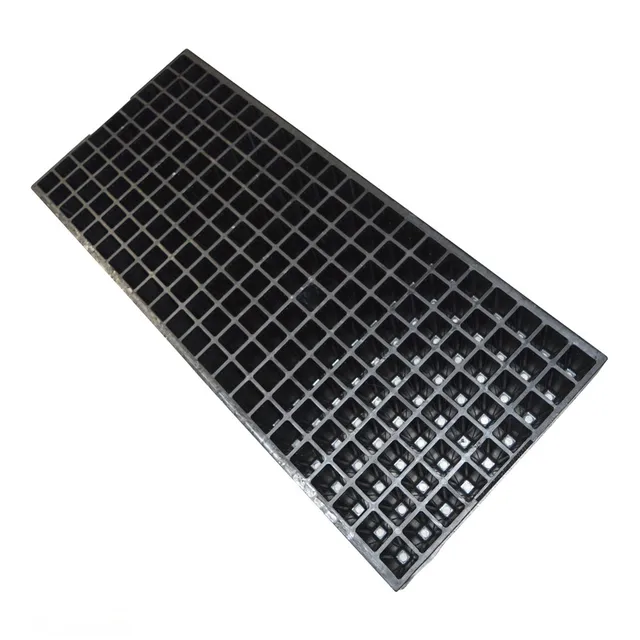
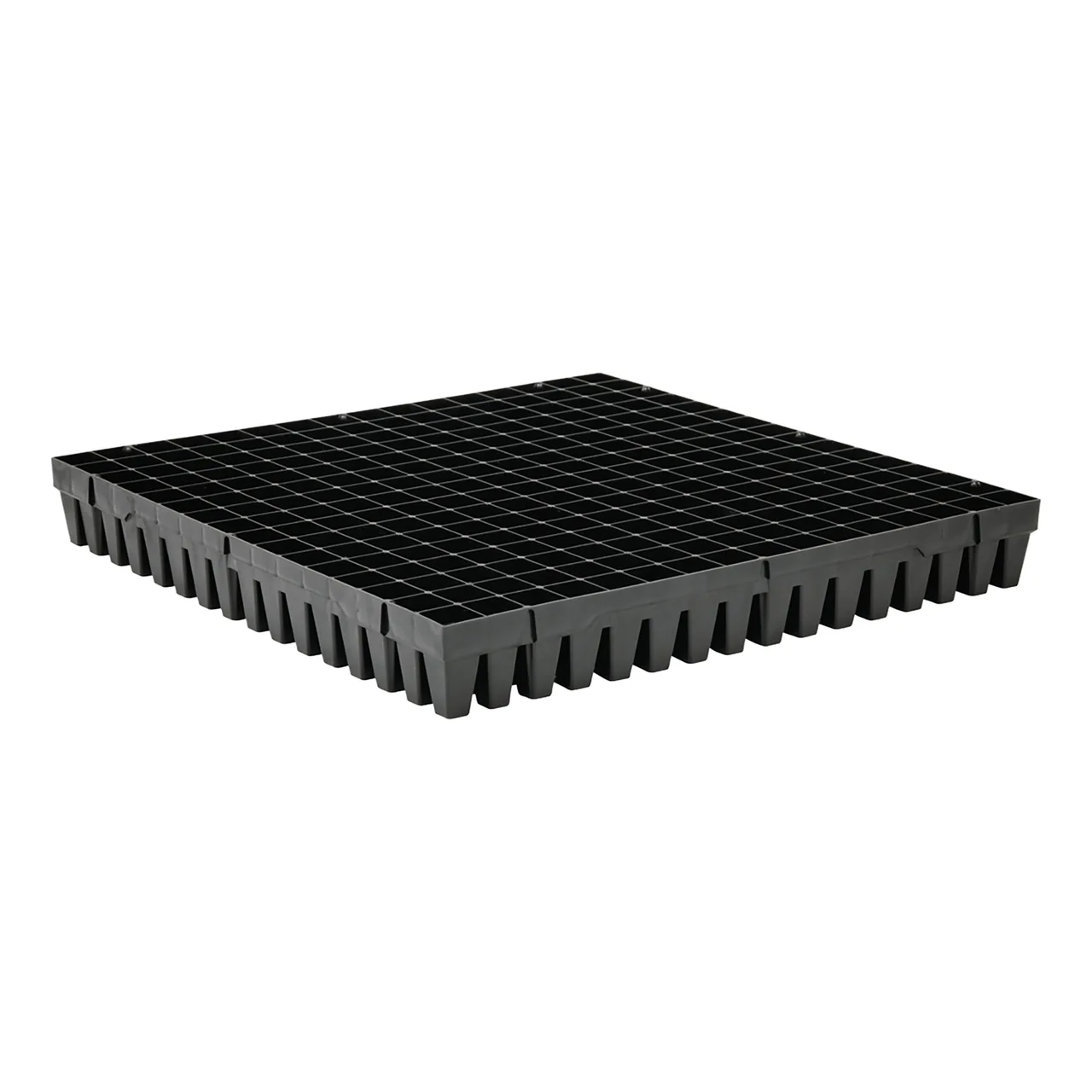
The TS-256 is a high-density forestry seedling tray engineered for raising small seedlings destined for open-field nursery beds and bare-root planting programs. At 1,600 cells per m², it maximises production space while delivering the root and shoot quality needed for strong plantation establishment.
Square, uniform cells with air-pruning bases produce healthy, fibrous root systems without root curl. Seedlings develop to a high standard of root and shoot formation before being manually lifted, root pruned, and transported for planting — a workflow the TS-256 is specifically designed to support.
The air-pruning base prevents root spiralling during the formative growth stage, ensuring that when seedlings are lifted and transplanted bare-root, the root system is well-developed, compact, and free of deformation.
| Tray Dimensions | 395 × 395 × 50 mm |
| Cell Dimensions | 24 × 24 × 50 mm |
| Cell Volume | 16 cc |
| Cells per Tray | 256 (16 × 16) |
| Cells per m² | 1,600 |
| Material | Virgin HDPE with UV protection |
| Best For | Small forestry seedlings, bare-root planting programs, open-field nursery beds |
The TS-256 is designed for raising small forestry seedlings intended for bare-root planting programs. Seedlings are grown to the required root and shoot development standard, then manually lifted, root pruned, and transported for direct planting — typically into open-field nursery beds or plantation sites.
The air-pruning base of each cell exposes root tips to air as they reach the base, causing them to desiccate and stop elongating. This triggers the plant to produce more lateral branching roots rather than a single spiralling taproot — resulting in a compact, fibrous root system that performs well after transplant.
The TS-256 has been specifically engineered for compatibility with certain transplanting equipment. Contact Fernland for details on compatible machinery for your production setup.
Fern, our AI assistant, answers instantly using this product's label, safety data sheets and our store info — and can put you in touch with our team if you need further assistance.
| Suitable For | Nursery + Protected Cropping + Landscape |
|---|