

Cobbler's Peg
Bidens pilosa
Cobbler's Peg is a fast-growing summer annual weed with barbed seeds that stick to clothing, animals and machinery, spreading rapidly through nurseries and landscapes.
Cobbler's Peg is an upright annual herb that typically grows 30–100 cm tall, though it can reach higher in favourable conditions. It has an erect, branching stem that is often slightly angular or ridged, and a taproot system that anchors it firmly, making hand removal easier when soil is moist but difficult once established in dry, compacted ground.
The leaves are opposite, mid-green and pinnately divided into three to five toothed leaflets, giving the foliage a slightly serrated, feathery appearance. Flowers appear from spring through to autumn in warmer regions, and consist of small daisy-like heads with white outer petals surrounding a yellow central disc, borne on slender stalks above the foliage.
The most distinctive feature is the seed head: after flowering, it produces clusters of narrow, black, needle-like seeds (achenes) tipped with two to three barbed bristles. These barbs catch readily on clothing, animal fur, footwear and equipment, which is the primary means of dispersal and the origin of the common name.
Cobbler's Peg is widespread across eastern and northern Australia, particularly in Queensland, New South Wales and parts of the Northern Territory, thriving in disturbed soils, garden beds, nursery containers, turf edges and waste areas. It germinates readily after rain in warmer months and can complete a full life cycle from germination to seed set in as little as six to eight weeks, allowing multiple generations per season.
Management relies on preventing seed set, since a single plant can produce large numbers of viable seed. Regular slashing, hand-pulling or hoeing before flowering, combined with maintaining dense turf or mulch cover to reduce germination opportunities, are key non-chemical controls. Herbicide options exist for both seedling and established growth stages, but timing before seed set is critical given the weed's rapid life cycle and reliance on physical seed dispersal.
How to identify
- Weed encroachment: Look for clusters of upright, branching plants with divided, toothed leaves appearing rapidly in disturbed soil, garden beds, container media or along turf edges after rain.
- Flowers and seed heads: Small white-and-yellow daisy flowers followed by clusters of narrow black seeds with barbed tips are a reliable identification feature — check for seeds sticking to clothing or gloves after brushing against the plant.
- Field check: Run a hand or cloth along a suspect seed head; if barbed black seeds cling readily, this confirms Cobbler's Peg rather than a lookalike.
- Lookalikes: Bidens pilosa can be confused with other daisy-family weeds such as fleabane (Conyza spp.), but fleabane lacks the barbed, needle-like seed clusters and has narrower, undivided leaves. Farmer's friend or related Bidens species may also occur and are difficult to distinguish without close inspection of leaf division and seed bristle number.
- Spread pattern: Presence of plants concentrated along fence lines, pathways, vehicle tracks or animal movement corridors suggests seed transport via burr-like attachment rather than wind dispersal.
Registered products we stock

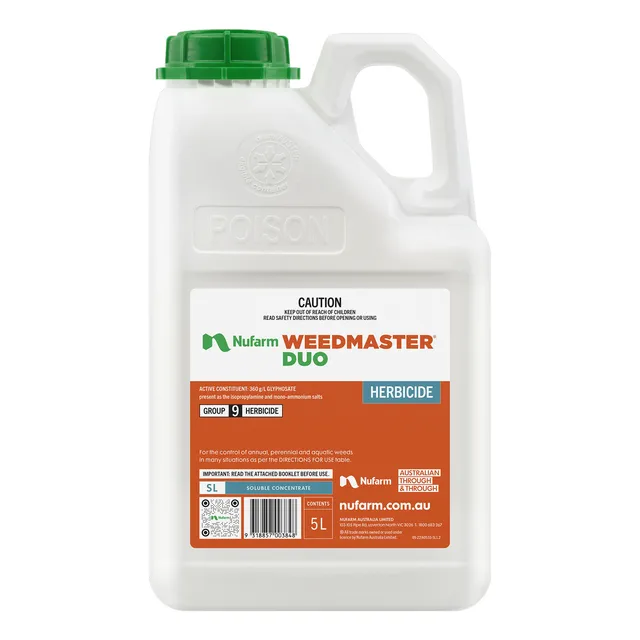
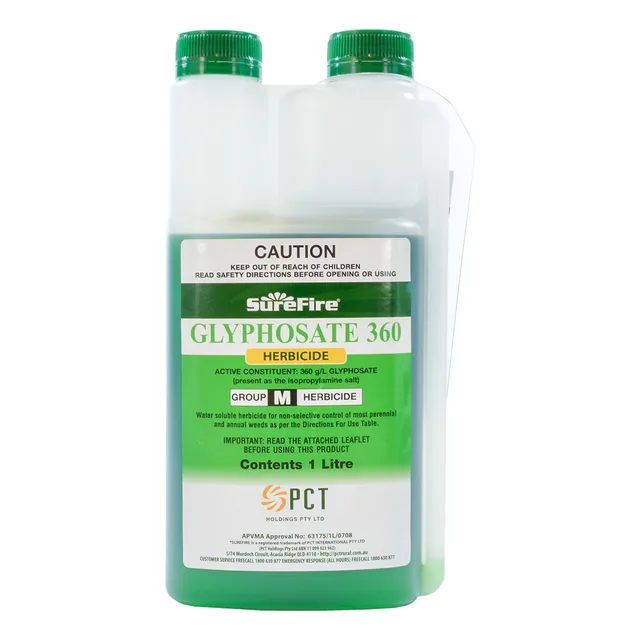
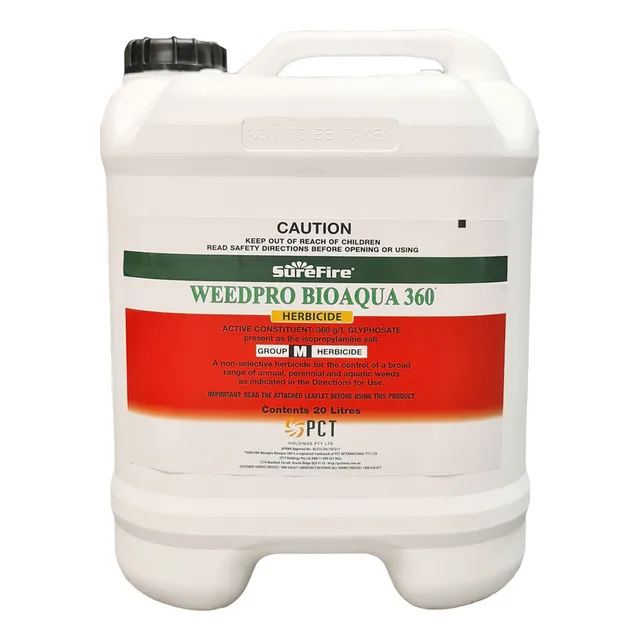
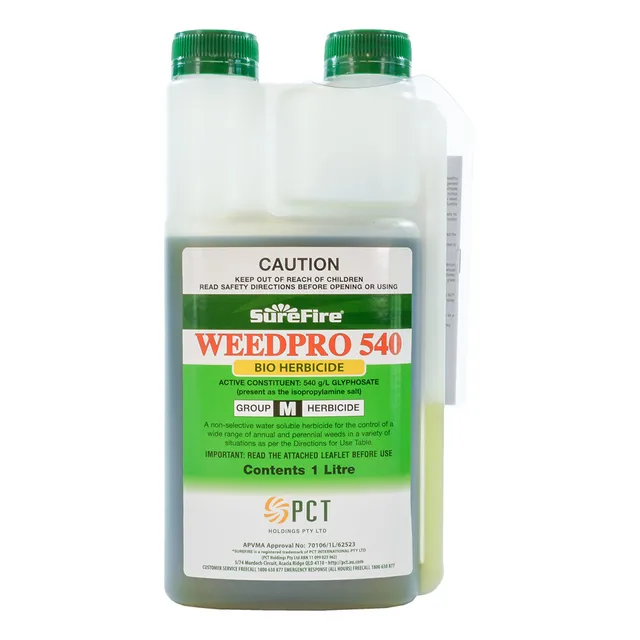
No products match those filters.