

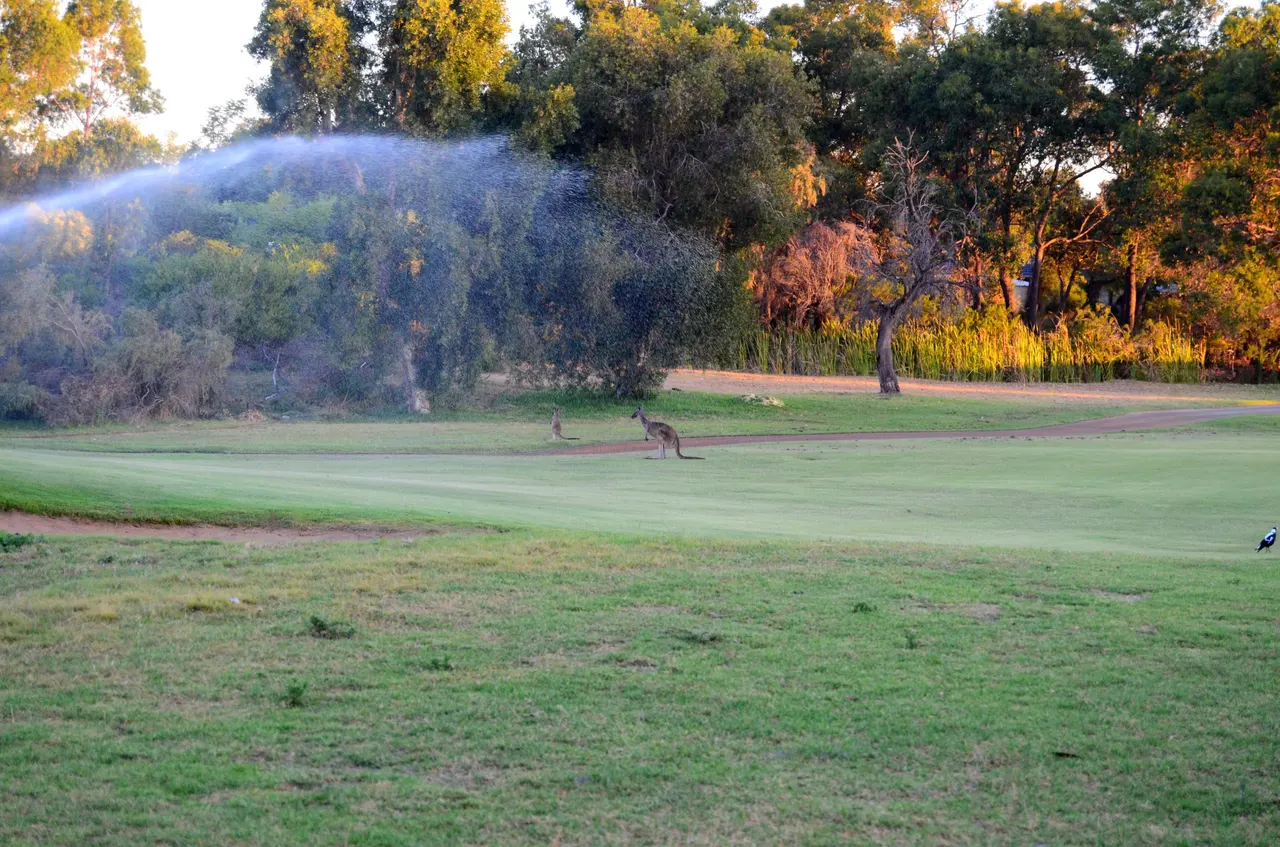
Wetting agents used in turf and nursery work fall into two groups that do different jobs. Soil products move water into and through a water repellent profile or potting mix. Non-ionic spray wetters help a chemical spray spread across the leaf. Match the product to the target: dry patch and media that sheds irrigation need a soil product, while a herbicide or fungicide label that calls for a wetter needs a registered spray adjuvant.
Key takeaways
A soil wetting agent fixes how water moves through soil or potting mix. A non-ionic spray wetter improves how a chemical spray covers foliage. They are rarely interchangeable.
Water repellency comes from waxy organic coatings on particles, and sand-based profiles with little clay are the most exposed.
Granular products suit dry application and potting mix incorporation. Liquids suit spray programs and fast correction through irrigation.
Only add a spray wetter when the chemical label directs it, and only use a product registered for that purpose.
Application rates come from the product label. Check it on each product page before every program.
What are wetting agents and how do they work?
Wetting agents are surfactants that lower the surface tension of water so it can wet surfaces it would otherwise bead on. In soil and potting mix, they let water get past waxy, water repellent coatings on particles. In a spray tank, they help droplets spread across a leaf instead of rolling off.

Water repellency develops when hydrophobic organic compounds from decomposing plant material coat soil particles. The Soil Quality water repellency fact sheet notes that sandy soils with less than 5% clay are the most susceptible, because a small particle surface area takes less waxy material to coat. That is the same kind of profile found under many greens, bowling greens and sports fields.
The effect in the field is uneven wetting. Water ponds, runs off or channels down a few narrow paths, leaving dry pockets in the root zone even under regular irrigation. In turf this shows up as localised dry patch. In containers it shows up as mix that stays dry under a wet surface, or water running straight out of the drainage holes.
Queensland research confirms the fix. A 2009 Redlands Research Station project for the turf industry, published through the Queensland Department of Primary Industries, found that soil surfactants cut the time for water to infiltrate dry samples taken from a severely hydrophobic site, and that repellency is usually managed with regular surfactant applications.
Soil wetting agent vs non-ionic spray wetter: what's the difference?
A wetting agent for soil is applied to the root zone to change how water moves through soil or media. A non-ionic spray wetter is a tank additive that changes how a chemical spray covers foliage. Both are surfactants, but they are formulated, labelled and applied for different targets, so one rarely does the other's job.
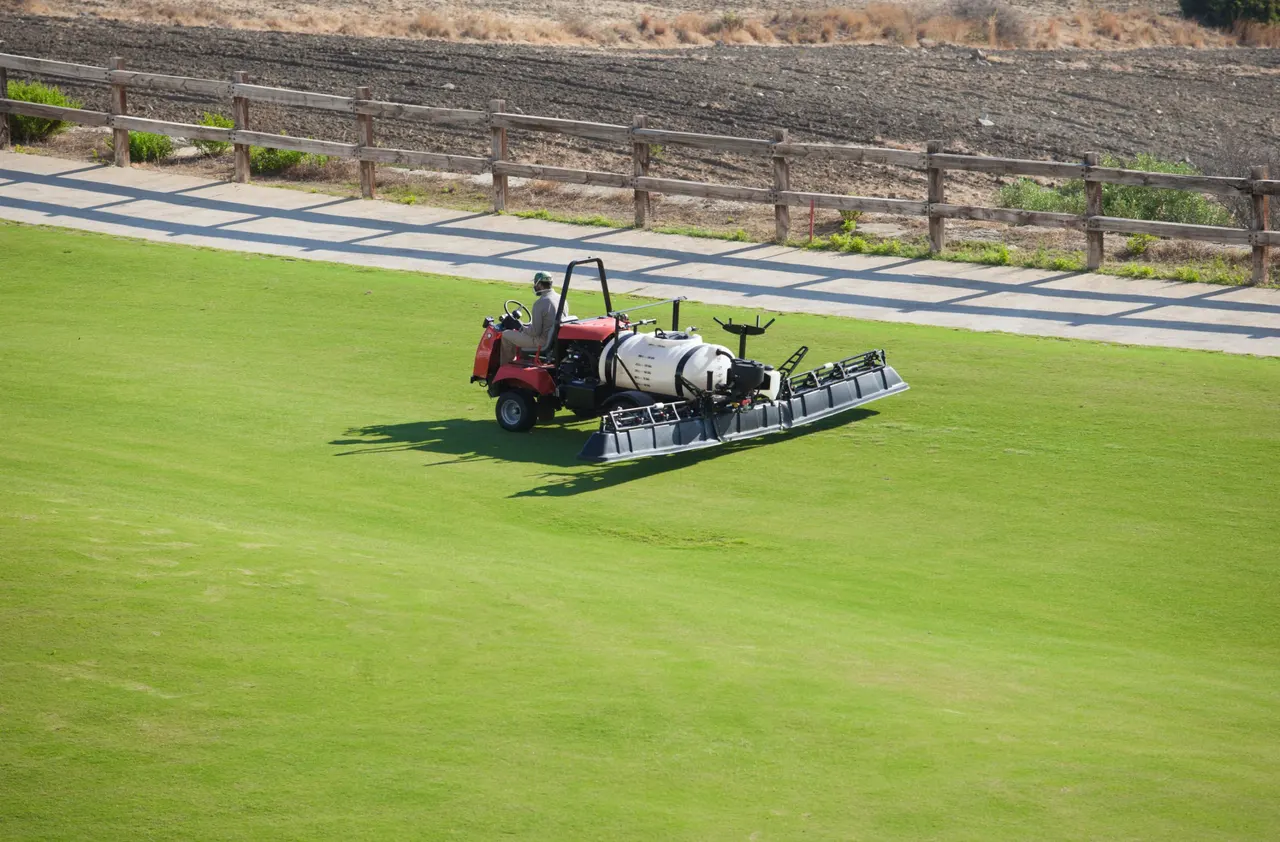
The confusion comes from the name. Searches for the term cover both, and many spray adjuvants carry "wetter" in the product name. The table below separates them.
Feature | Soil-applied wetting agent | Non-ionic spray wetter |
|---|---|---|
Target | Soil profile, root zone or potting mix | Leaf surface of the target weed or plant |
Problem solved | Dry patch, runoff, channelling, poor rewetting | Poor spray coverage and droplet run-off |
Applied | Granular broadcast, incorporated into media, or liquid watered in | Added to the spray tank with a pesticide |
When to use | Ahead of and through dry, hot periods | Only when the chemical label directs it |
Label and SDS | Product label and SDS set use and handling | Registered adjuvant with an APVMA number |
FloraTech option | Use the wetter type the chemical label specifies |
Some spray wetters also list soil or irrigation uses on the label. The rule stays the same: use each product only for the situations its label covers.
Which soil wetting agent suits your site?
The right product depends on the profile, the surface and how you can apply it. Sand-based sports turf generally calls for a residual product applied through the season. Nursery media suits a granular incorporated at potting or a liquid through irrigation. Large open areas often favour granular broadcast where irrigation cannot follow straight away.
Penetrants, retainers and blends
The GRDC soil wetter fact sheet describes modern products as surfactant blends that combine penetrant properties, which move water in, with humectant properties, which help hold it. It also notes that it is difficult to predict which chemistry best suits a particular repellent soil. Earlier work catalogued by the WA Department of Primary Industries and Regional Development found large performance differences between products tested on water repellent Bassendean sand. In practice, residual products such as AquaSport and AquaPro suit ongoing programs on sand-based turf where repellency returns every season. General purpose and granular options such as AquaFlo and AquaFix suit correction work, mixed sites and potting media. Trial any new chemistry on a known problem area before rolling it out across a whole site.
Granular or liquid wetting agent?
A granular wetting agent suits dry application, potting mix incorporation and sites where irrigation cannot follow straight away. A liquid wetting agent suits spray programs, fast correction of dry patch and application through irrigation or fertigation.
Factor | Granular | Liquid |
|---|---|---|
Application | Broadcast spreader or incorporated into mix | Boom spray, hose-end or injected through irrigation |
Best fit | Fairways, ovals, parks, potting and propagation mixes | Greens, sports fields, rapid correction |
Irrigation timing | Suits sites where watering in can't happen immediately | Best watered in per label directions |
Fits a spray program | No | Yes, with compatible tank partners |
FloraTech wetting agents at a glance
Product | Type | Form | Where it fits |
|---|---|---|---|
100% active non-ionic residual wetting agent | Liquid | Preventing localised dry patch on sports turf | |
General purpose non-ionic surfactant | Liquid | Turf, nursery and landscape where spray volume is limited | |
Non-ionic surfactants loaded on NZ zeolite | Granular | Fairways, tees, ovals, parks, potting and propagation mixes | |
Advanced residual product with long-lasting penetrant chemistry | Liquid | Monthly residual programs on sports turf, with dew and rain dispersal |
All four sit in the FloraTech range, alongside AquaFirm, an advanced liquid penetrant.
For turf managers: when should you apply a turf wetting agent?
Apply before the profile dries out heading into summer, then keep a residual turf wetting agent going through the high-stress period rather than reacting once patches appear. Confirm the soil is repelling water and rule out disease and pests first. Sand-based greens and sports fields benefit most, as low clay content makes them quickest to turn repellent.
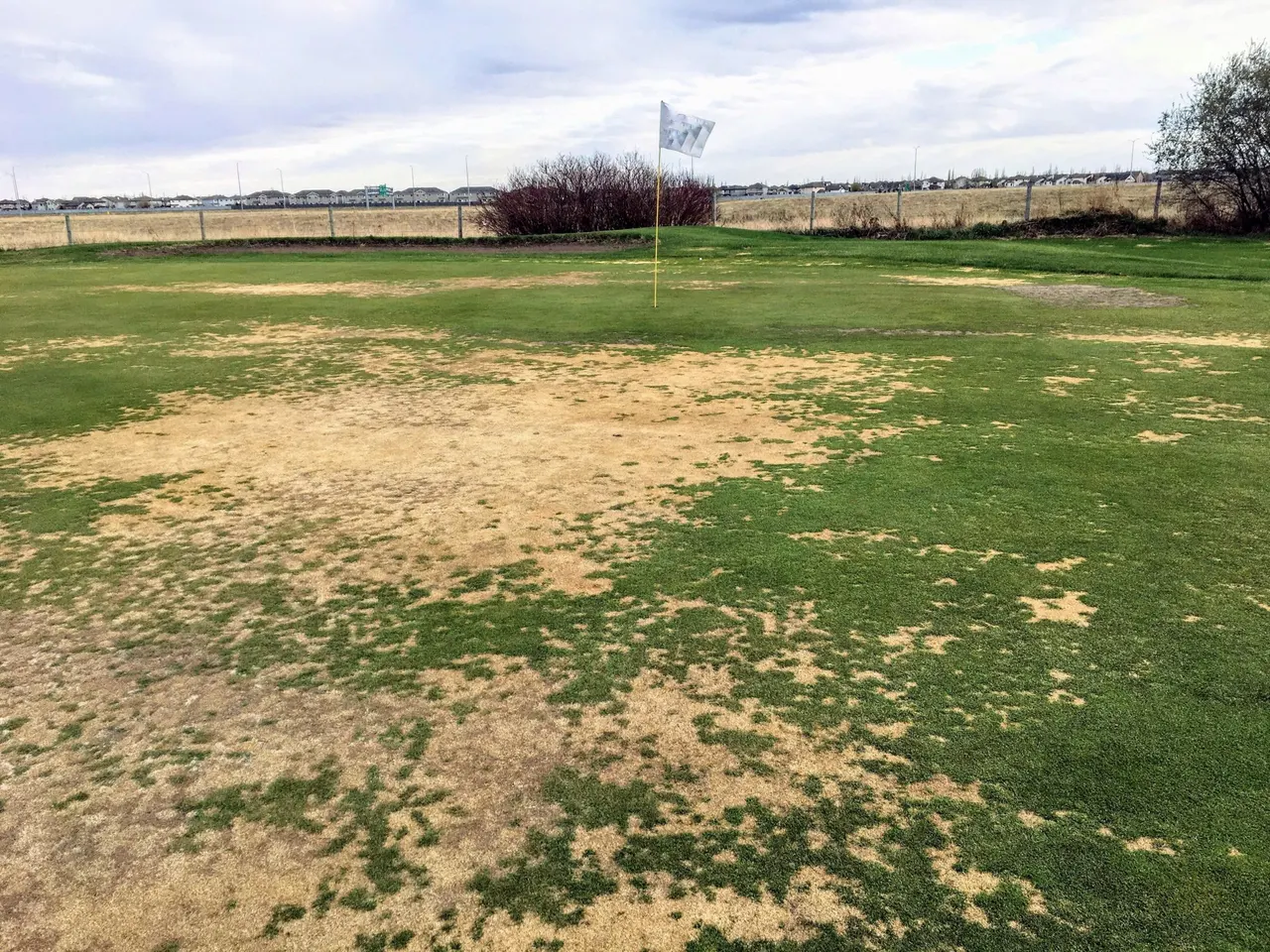
Dry patch looks like drought stress, fungal disease and grub damage all at once, so diagnosis comes first. The Fernland Problem Solver covers turf diseases and pests and works back from what you are seeing to the product that treats it.
How to confirm water repellency on site
Take a core or plug from the affected area and one from healthy turf nearby.
Let both dry, then place a drop of water on the soil at several depths down each core.
Time how long each drop takes to soak in. A drop that beads and sits for more than about 5 seconds indicates water repellent soil.
Compare the two cores. Repellency confined to the patch confirms a wetting problem rather than an irrigation coverage fault.
Check sprinkler coverage across the patch before treating, so the treatment is not covering for a head that is out of adjustment.
Once confirmed, residual products such as AquaSport and AquaPro are built for ongoing programs on sports turf, while granular AquaFix suits fairways and ovals where boom access or watering in is limited. Start the program before summer stress sets in. The Summer Turf Survival Guide covers how this fits with watering, mowing height and heat management. For the wider turf range, see Fernland turf care.
For nurseries: how do you keep potting mix wettable through production?
Build wettability into the mix at potting, then maintain it through irrigation. A granular wetting agent incorporated into the batch protects the mix from the start, and a liquid applied through overhead irrigation or fertigation corrects pots that have dried out on the bench during heat and wind.

Bark, peat and coir all lose wettability once they dry hard, and black pots on exposed benches dry fastest at the edges. The result is mix that looks watered on top while the root ball stays dry. Our guide to nursery watering problems walks through the symptoms in detail.
AquaFix is formulated for potting and propagation mixes, with a zeolite carrier that also contributes moisture and nutrient holding. AquaFlo suits correction through irrigation across nursery, turf and landscape work. Coir-based mixes rewet more easily than peat, which changes how hard a wetting program needs to work. See getting the most out of coir-based growing media, and the Fernland nursery page for the full production range.
When does a herbicide or fungicide label call for a non-ionic wetting agent?
Only when the label says so. Many herbicide, fungicide and insecticide labels direct the user to add a non-ionic wetting agent to improve coverage, and specify the rate. If the label is silent or excludes additives, do not add one. Any spray wetting agent used must be registered for that purpose.
The APVMA adjuvant guideline groups adjuvants into those that enhance the efficacy of the pesticide, which includes non-ionic surfactants, and those that improve ease of application. Registered claims cover wetter or spreader, penetrant, sticker, humectant and extender. The 2019 GRDC adjuvants booklet counted more than 400 branded products registered in Australia across adjuvant, surfactant and wetter categories, which is why reading the chemical label first matters more than the adjuvant name.
The chemical label names the type of wetter it needs, and every product page on the Fernland site carries the current label and SDS. Trade accounts can also pull every current SDS for products bought in the last 12 months from the Fernland SDS and label compliance register.
Can wetting agents be tank mixed with fertilisers and chemicals?
Often, but only when both labels allow it. Some soil products are built for tank mixing. AquaSport, for example, is described as compatible with other soil chemicals and fertilisers. Always confirm on both labels and run a jar test before mixing a new combination at full scale.
How to run a jar test before tank mixing
Read both labels for compatibility statements, mixing order and any products to avoid.
Fill a clear jar with the same water you will use in the tank, at the same proportion.
Add each product in the label mixing order, in proportion to the planned tank mix, shaking between additions.
Let the jar stand for 15 to 30 minutes and check for separation, clumping, curdling, heat or heavy foam.
If anything separates or reacts, do not mix the combination. Apply the products separately.
For a quick answer on a specific combination, Fern, the AI assistant on each Fernland product page, answers from that product's label and SDS and can hand the question to our team.
Frequently asked questions
Are wetting agents and surfactants the same thing?
They are a type of surfactant, short for surface active agent. In the trade, the term usually means a soil product that improves water movement through soil or media, while "surfactant" or "wetter" often refers to a spray adjuvant. Check the label to confirm which job a product is registered or designed for.
How long does a soil wetting agent last?
It depends on the product chemistry, soil type, rainfall and irrigation. Residual products are designed to stay active longer in the profile, while corrective products work quickly but break down sooner. Heavy rain shortens the interval. Reapplication intervals are set on each product label, so follow those for your program.
Can I use a spray wetting agent on soil?
Only if the label lists that use. Spray wetters are formulated to improve droplet coverage on foliage, not to treat water repellent soil. A few list turf watering among their registered uses. Where the label does not cover soil application, use a dedicated soil product instead.
Why do sand-based greens go water repellent faster?
Sand has a small particle surface area, so it takes less waxy organic material to coat it. Soils with less than 5% clay are the most susceptible to water repellency. Many greens, bowling greens and sports fields are built on sand-based profiles, which is why dry patch often shows up there first.
Do wetting agents reduce irrigation water use?
They improve how efficiently water is used. Queensland turf research from 2009 found surfactants cut the time for water to infiltrate dry, repellent soil, so more irrigation and rainfall reaches the root zone instead of running off. Some products, such as AquaSport, note potential to reduce water consumption where no turf wetter was previously used.
Where do I find application rates?
Application rates are on the product label, which sits on every Fernland product page alongside the SDS. Rates vary by product, surface and situation, so always read the current label before use. For advice on a specific site or program, contact the Fernland agronomy team.
The right wetting agents program starts with the target: a wetting agent for water movement in the root zone, and a registered non-ionic spray wetter only when a chemical label calls for one. Trade customers can browse the full FloraTech range at account pricing, build a cart and convert it to a quote, or apply for a trade account to get started.